Looking at Nikon’s Line and the Competition, the Z7 III Should Exist
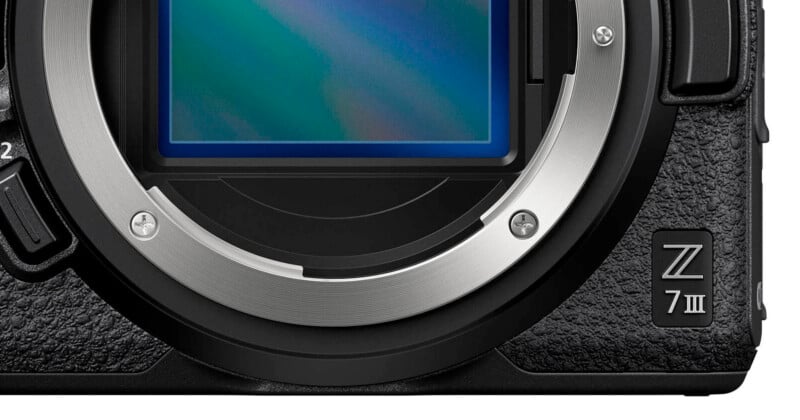
Last year, when Nikon announced the Z6 III, it did not accompany it with a Z7 camera like it had the two previous times the series had been announced. At the time, I argued there wasn’t really a need for it, but now a year later, I’m changing my tune.
When Nikon entered the mirrorless camera space in 2018, it did so with both the Z6 and Z7 cameras. Two years later, it followed up with the simultaneous announcement of the Z6 II and Z7 II. But last year, it just announced a Z6 III and made no mention of a Z7 successor. In conversations with Nikon, I got the sense the company didn’t think a Z7 successor would be necessary because the Z8 exists, and I was ready to accept that.
“The signs all point to Nikon quietly letting the Z7 series fade into the sunset. With the Zf, Z5, Z6 III, Z8, and Z9 cameras on the market, there isn’t really a place for the Z7 III,” I wrote.
“If Nikon were to release the Z7 III, it would awkwardly fit into this very streamlined camera lineup. It would have to be priced similarly or just a bit more than the Z6 in exchange for a higher resolution, but not so high or so performant as to compete directly with the Z8. As such, it would have to come in somewhere below the Z8, meaning worse performance somewhere. Given how much Nikon has packed into both the Zf and the Z6 III, intentionally hamstringing a camera just to force it to fit in its line doesn’t feel like a choice the company wants to make anymore.”
But a lot can change in a year. The Z6 III went through a couple of series of price cuts to bring it down to $2,099, meaning there is now a gap in Nikon’s line, from a pricing perspective, that wasn’t there before. If we don’t look at Nikon in a vacuum and also include its primary competitors, Canon and Sony, that gap becomes even more noticeable:
Canon
- RP: $899
- R8: $1,399
- R6 II: $2,099
- R6 III: $2,799
- R5 II: $3,899
- R3: $4,399
- R1: $6,899
Sony
- a7 III: $1,499
- a7 IV: $1,999
- a7c II: $2,499
- a7R IV: $2,999
- a7CR: $3,199
- a7R V: $3,299
- a7s III: $3,999
- a9 III: $6,799
- a1 II: $6,999
Nikon
- Z5: $999
- Z5 II: $1,599
- Z6 II: $1,649
- Zf: $1,899
- Z7 II: $1,899
- Z6 III: $2,099
- ZR: $2,199
- Z8: $3,599
- Z9: $5,199
Note: I am aware that Sony’s line is actually more complicated than that. Notwithstanding the ZV series, Sony still produces the a9 II and a1 and considers both part of its active set of options. I opted not to include them here because they overly complicate the discussion, make seeing the core of each brand’s lineup more difficult, and because I don’t think Sony needs to maintain the more than 11 active full-frame cameras that it does (but that’s a different story).
To make it easier to visualize, I charted all of these prices on a line graph to show how the three brands’ options look next to each other. Canon is red, Sony is blue, and Nikon is gold:

All three brands have a noticeable spike in price near the top end of their lines (Sony’s would not be quite as sharp if the older models were included, for what that’s worth), which I argue is expected. What is noticeable, however, is that Nikon’s spike happens sooner than both Canon’s and Sony’s and is much sharper. While it doesn’t reach the heights of either Canon or Sony — because Nikon’s pricing strategy is to keep itself below its competitors — there is clearly something missing here: a camera in the mid to high $2,000 area.
Canon and Sony don’t have a spike in prices until after photographers are already looking at the $4,000 range, but Nikon has that spike starting at $2,200, and it’s a rather substantial $1,400. I now believe that Nikon needs a camera that sits in this space, and the best option is something that provides the other side of the coin that the ZR offers: a photography-focused, high-resolution camera. That is, of course, the Z7 series camera.
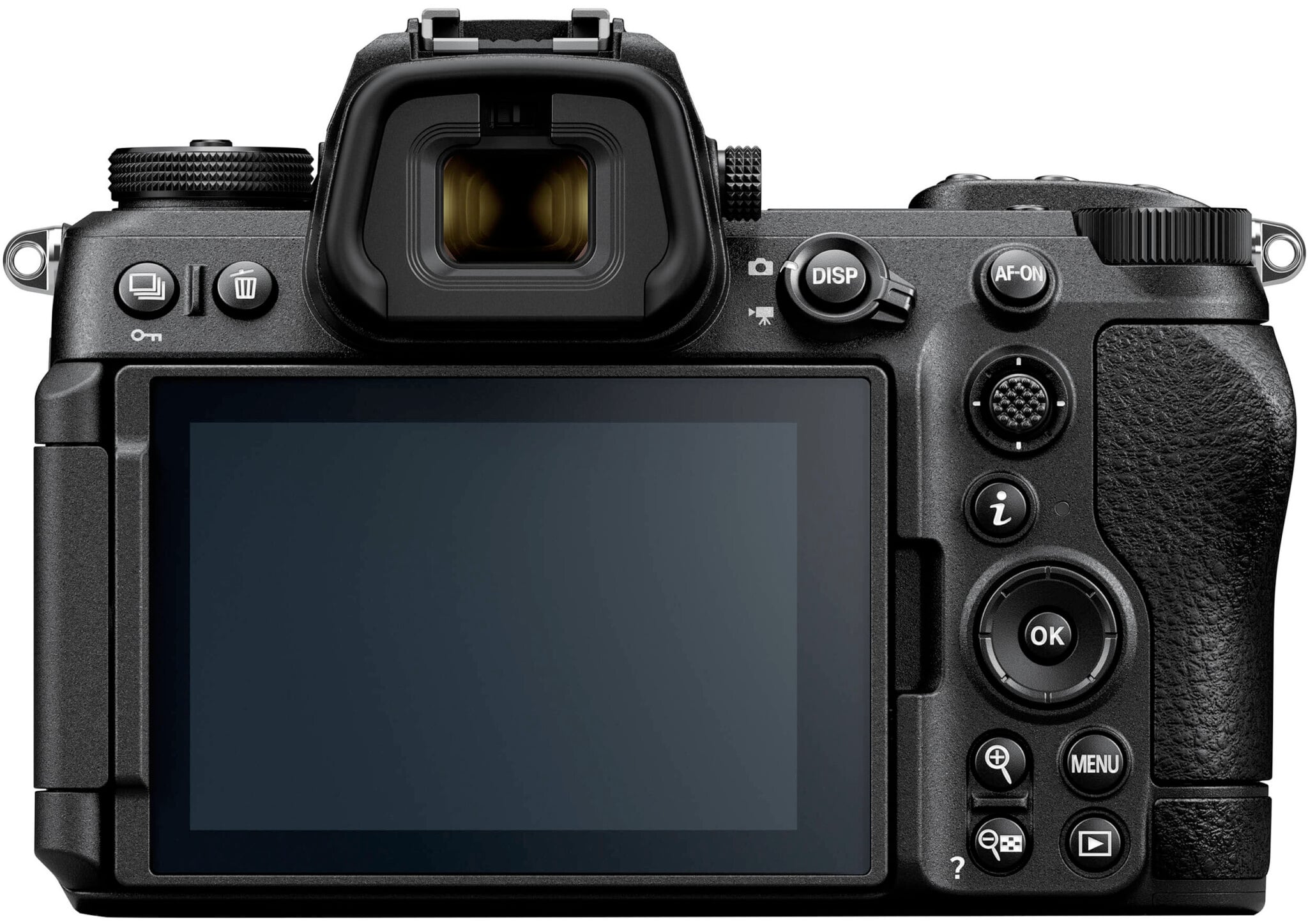
Last June, PetaPixel‘s Jordan Drake described a Z7 III camera that would perfectly fill this gap. If Nikon used the same Z6 III body (to keep manufacturing costs down), that is already an excellent starting point with both the 5.76M dot EVF and the stabilization unit being easy transfers to a Z7 III. Nikon could also use the 60-megapixel sensor that has existed in Sigma cameras like the fp, which has already been shown to be outstanding for photography. Don’t stack the sensor either, as that will keep the price down. That would mean it wouldn’t be a great sensor for video, but given that Nikon has good video options in its line already, it’s okay to lean into a photography-focused body the same way Nikon leaned into video with the ZR. Sony does this with the a7R V, so there is precedent for a successful camera with this design philosophy.
Drake suggested Nikon ditch the articulating screen on the Z6 III body since many photographers don’t like it, and while I agree that this would please a lot of them, changing anything about the body design will incur costs, and if Nikon is going to produce this camera affordably, that’s not something that is critically important to change.
Add-in Nikon’s most recent processor along with the latest autofocus algorithms (knowing full well performance won’t be quite as good with a slower sensor, this is still the right move), video updates (even though video won’t be a strong suit, it doesn’t cost more to include waveforms and N-log), a mechanical shutter with a 1/400 second shutter sync (which does exist), and package it all together for an asking price of $2,800, and photographers would have a very compelling option that would round out Nikon’s Z series extremely well.
Nikon would also benefit from this because it would be the final push that many photographers who are still married to their D810 and D850 DSLRs would need to leave them behind and jump into the Z system, where Nikon then has the option to sell them substantially better lenses.
I am aware that the idea of making a camera that doesn’t have the ability to also be a “hybrid creator camera” would seem like a risk in this market, but if a camera already exists in the lineup (arguably, Nikon has two), then it doesn’t hurt to appeal to a different audience. Cameras like the a7R series and the D800 series were successful because of their photo-taking prowess.
We get the sense that Nikon’s Z6 III didn’t hit the sales numbers Nikon was hoping for, at least not initially, mostly due to three factors: the relatively low resolution, the reported weak dynamic range, and the price. Two out of the three of those issues are specifically photography-related complaints, so there is plenty of evidence to suggest that photographers, pure photographers, have a lot more sway in the market than they get credit for.