Google’s Pixel 10 Series Boosts Processing for Better Software and AI
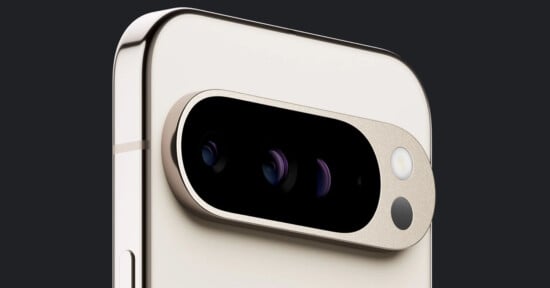
Google has announced the Pixel 10 series of devices, which promise significantly improved processing power to handle new software and AI-based features. The flagship devices, the Pixel 10 Pro and Pro XL, don’t bring many hardware improvements to the table, instead focusing on usability in what may be seen as one of Google’s more iterative updates.
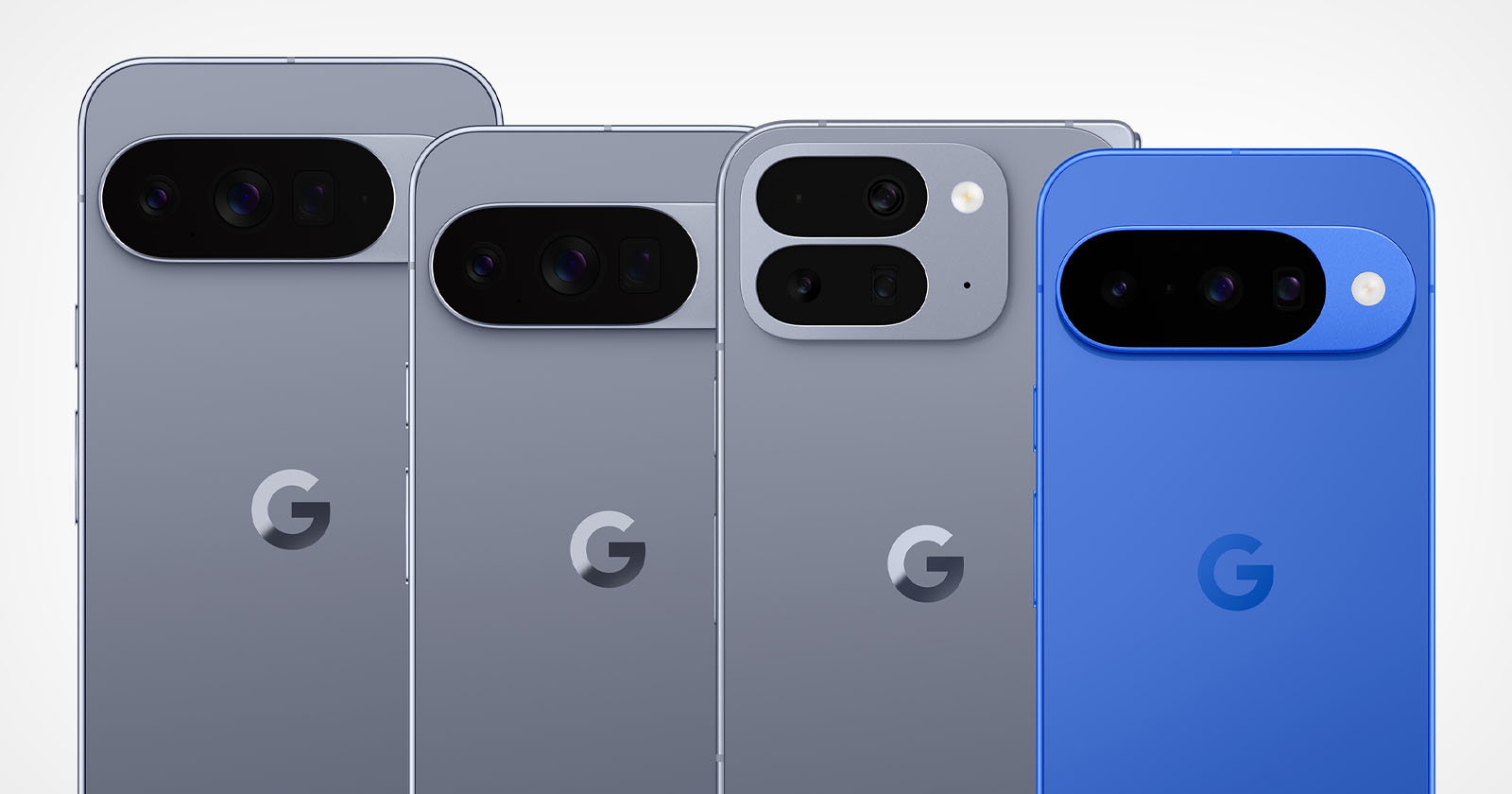
Google Pixel 10, 10 Pro, and 10 Pro XL
Surprisingly, Google’s updates to the Pixel 10 platform are most visible in the base Pixel 10 device. For the first time, Google’s base Pixel phone features three camera systems, including a 5x telephoto lens. Google says this is a “best in class” camera and that it decided it wasn’t fair to hold it away from its lowest-priced device.
The Pixel 10 features a Type 1/2 48 megapixel f/1.7 wide camera, a Type 1/3.1 megapixel f/2.2 ultra-wide, and the aforementioned Type 1/3.2 10.8 megapixel f/3.1 telephoto.

The rest of the specifications for the Google Pixel 10 don’t come as too much of a surprise. It features a 6.3-inch, 1,080 by 2424 pixel OLED Actua display with a 60 to 120Hz variable refresh rate, HDR support, and up to 3,000 nits peak brightness.
The other major upgrade is shared with all the Pixel 10 phones, and that is the addition of the Tensor G5 chip. On that note, it’s probably the biggest update to the Pixel 10 Pro line, as Google chose to focus on software and usability features in its flagship line over visible hardware changes. Google says that G5 is its biggest upgrade yet, promising a major performance boost: its up to 60% more powerful TPU and 34% faster on average CPU means the company says that everyday use will feel significantly more responsive.

“Tensor G5 is designed in the leading 3 nm process node from TSMC — a manufacturing technology that allows us to pack more transistors into the chip so it’s more powerful and efficient,” Google says. “New security hardware in Tensor G5 also protects Pixel even better throughout its lifecycle, from manufacturing to the moment it’s in your hand.”
Google says G5 also improves the whole image capture system in its new devices, thanks to a new Image Signal Processor (ISP), which the company promises will allow for capturing high-quality videos even in low light, and is why the Pixel 10 series shoots 10-bit video by default in both 1080p and 4Kp30.
The Pixel 10 series is also the first to feature C2PA Content Credentials built in, which all takes place on-device on Tensor G5 and with Google’s Titan M2 security chip.
Both the standard Pro and Pro XL devices use the same camera system: a Type 1/1.3 50 megapixel f/1.68 wide camera, a Type 1/2.55 48 megapixel f/1.7 ultra-wide, and a Type 1/2.55 48 megapixel f/2.8 telephoto.
All three Pixel devices feature a new AI photography tool called Pro Res Zoom. On Pixel 10, that means the 5x telephoto can extend up to 20x thanks to AI, while the Pro and Pro XL can push that to 100x zoom.
Google’s other AI-powered addition is called Camera Coach, which leverages Gemini to suggest ways to improve a photo’s framing or composition.
“Built for those of us early on in our photography journey, Camera Coach will teach foundational concepts while inspiring you to capture images in entirely new ways,” Google says.

Like the Pixel 10, the remaining Pixel 10 Pro specifications aren’t a surprise. The 10 Pro features a 6.3-inch, 1,280 by 2,856 pixels OLED Super Actua display with variable refresh rates between 1 and 120Hz and 3,300 nits of peak brightness. The Pixel 10 Pro XL mirrors those specifications, except in size: it has a 6.8-inch 1,344 by 2,992 pixels OLED Super Actua display.
For all three devices, Google says that battery life should be at least 30 hours and that can be extended to up to 100 hours with “Extreme Battery Saver” mode. The Pixel 10 and 10 Pro can also be fast-charged to 55% in about 30 minutes via a 30W charger, while the 10 Pro XL can get up to 70% charge in about half an hour via a 45W charger.
Google Pixel 10 Pro Fold
Google is calling the Pixel 10 Pro Fold its most durable foldable yet and promises that it is packed with the best it has to offer: a gearless hinge, improved camera system, and the inclusion of the new Tensor G5. It is the first folding phone to feature IP68 water and dust resistance, and the company claims the screen and hinge upgrades mean it can handle over 10 years of folding. Both of the 10 Pro Fold’s screens have a peak 3,000 nits of brightness, and the battery promises the same 30+ hours of life as the other Pixel 10 phones (it can also be charged to 50% in 30 minutes).

The rear of the system features a triple camera array: a Type 1/2 48 megapixel f/1.7 wide camera, a Type 1/3.4 48 megapixel f/1.7 ultra-wide camera, and a Type 1/3.2 10.8 megapixel f/3.1 telephoto camera. On the front and on the inside of the fold are the same 10-megapixel f/2.2 cameras (Google did not provide additional specifications for the front-facing or inner cameras).

“Pixel 10 Pro Fold also introduces Instant View, a new feature designed to help you make sure you get the perfect shot. When your phone is unfolded, you can preview your photos instantly, giving you a chance to quickly re-take a picture before the moment passes. This new addition joins other foldable camera features like Made You Look, Dual Screen Preview, and Tabletop Mode,” Google adds.
Pricing and Availability
The Google Pixel 10 is available starting at $799, the Pixel 10 Pro from $999, the Pixel 10 Pro XL from $1,199, and the Pixel 10 Pro Fold from $1,799. All four devices can be pre-ordered starting today and will be shipping to retailers starting August 28.