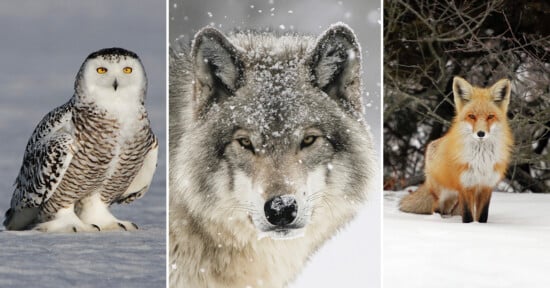
Master Winter Wildlife Photography: Everything You Need to Know
Master winter wildlife photography with expert tips on camera settings, gear, composition, and field strategies to capture stunning images of animals in snowy landscapes.
Master winter wildlife photography with expert tips on camera settings, gear, composition, and field strategies to capture stunning images of animals in snowy landscapes.
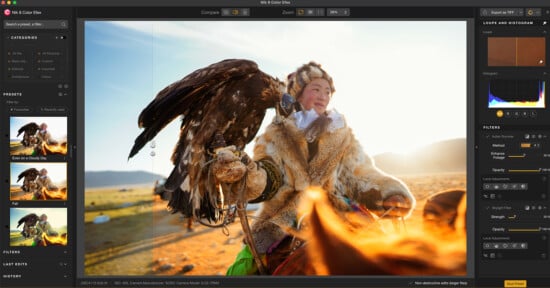
Beyond basic RAW adjustments lies the world of creative color grading where photographers define their signature style. DxO's recently updated Nik Collection 8 unlocks a staggering amount of creative potential, but knowing where to start with its powerful Color Efex plugin is key.
A crew working for an unnamed wildlife photographer fed and used cellophane paper to lure a fox for the 'perfect shot' in Grand Teton National Park. Since the fox was conditioned to human food, park officials euthanized it. The photographer got his shot. The fox paid with its life. Learning about this event became the North Star for Arthur Lefo, an OM SYSTEM Ambassador who has spent almost a decade photographing iconic wildlife. Lefo believes that ethical wildlife photography isn't just about rules, but respect.
Four miles into my hike in the Ansel Adams Wilderness, I started daydreaming about Adams’s mule, that stalwart equine that carried his large-format camera, developing equipment, tent, provisions, and other supplies on his excursions into California's high country.
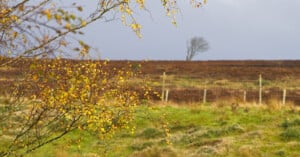
The design of an image is one of the most important aspects of photography, but composition is a vast and complex subject on which much ink has been spilled. It is well worth coming to grips with composition fundamentals, as they will transform your photography.
Each year, my photographic instrumentation students build very simple focus stacking systems. After several years, I decided to construct a more advanced version that could move a stepper-motor-driven stage to precise positions, automatically collect a series of images, and then manually use a stacking program for combination into a single high-depth-of-field image.

Choosing the correct shutter speed is imperative. Here’s how it works and why you should take it into consideration when shooting any photograph.
In my previous article, we embarked on an adventure that started with a basic understanding of metering and exposure. Hopefully, you appreciate how the camera measures light and how its aperture, ISO, and shutter speed can be balanced to expose the image correctly. Each of those changes the way the image looks, and here’s what the aperture does.
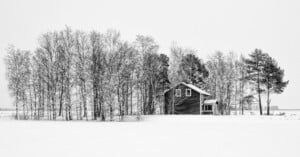
Photography requires greater technical understanding than any other art form. I’ve been teaching people at all levels of photography for well over a decade. At the start of each workshop, I always begin by explaining metering and basic exposure settings. A major foundation of good photography, these settings are often the least understood, but they are among the easiest things to get right.
If you’re someone who makes a living by creating things with your computer, or even an enthusiastic hobbyist, chances are that eventually, you’re going to need more room to store all of your stuff than can be provided by the drive(s) built into your computer. Arguably more importantly, if you’re especially attached to some of the work you’ve done and would like to protect it from loss, you’re going to want some method of backing up your data.
Astrophotography has exploded in popularity over the past decade, thanks to ever-improving sensors, automated tracking mounts, and processing software that practically polishes your stars for you. But in a digital world obsessed with data, sharpness, and pixels, I found myself increasingly disengaged.
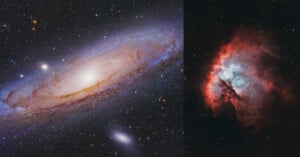
While photographing wide-angle nightscapes is a common occurrence for astrophotographers, not many capture the faint nebulae and distant galaxies hidden beyond the Milky Way. Trevor Jones, creator of AstroBackyard, turned his obsession with space into a dedicated passion, teaching himself astrophotography to share the deep-sky he first witnessed through a telescope. Now a successful YouTuber and respected voice in the community, Jones helps demystify the process.
As a photographer, if there is one thing I despise when editing my photos, it is jumping between multiple editing apps with one single photo and ending up with duplicate files where my settings are burned in and can’t be tweaked down the line.
Google launched new AI-powered Arts & Culture experiments this week, including Learning Light, an experiment by Google Arts & Culture Lab artist in residence Jack Wild. This interactive tool walks users through lessons and experiments to help them learn about lighting.
Words play a significant role in photography in many ways as we talk and write about them. I created the above image many years ago using an online app, Wordle, which used text content and analyzed the significant words. The larger the word, the greater the frequency of use.
The difference between a good landscape photo and an extraordinary one often comes down to one thing: Light. And there's a magical window of time, called the Blue Hour, that offers some of the most atmospheric, cinematic light in landscape photography. However, many photographers overlook or struggle to fully capture its unique potential.
Film photographer and educator Tim Klein's recent YouTube video explains the tricky concept of exactly why aperture affects your depth of field in a very digestible way.
Taking on a personal project is the next level. It makes you treat photography as an art form. Like in any art, you first start with one-offs, singles, or short stories, and only then approach writing a novel. And this is how I invite you to treat your personal project, as writing a novel, as opposed to snapping unconnected stories here and there.
The images of Japan that spring to mind are of the bustling, neon-splashed streets of Tokyo—towering walls of steel and glass, teeming pedestrians dodging traffic. But the Land of the Rising Sun also harbors visions of natural beauty that stretch the eye to the horizon and tug at the soul.
As a photographer, you are taught to see different compositional elements in other people’s work, and you apply the elements that resonate with you to your own work.
For some people, a car or a motorcycle is nothing more than a method of getting from point A to point B. It is a tool, an instrument, something that serves a purpose and nothing more.
The high-speed class at Rochester Institute of Technology learns Arduino programming and some simple circuits as an introduction on triggering high-speed flashes in complicated situations. One of the easiest high-speed events to study is a balloon popping. This simple event is also one of the safest high-speed events too.
When thinking about how to get started with wedding photography, you’ll want to make a checklist of things you need to do, have, or create. Today I’ll give you a starting point as well as prompts to help you customize your list. The first thing you might notice is that it’s not all about photography.
This article is about how to make a time-lapse system that controls the lighting conditions and triggers the camera shutter for time-lapse plants.
One of the crucial elements of a wedding day is the timeline. As photographers, the timeline dictates what types of photos you’ll be shooting and when you’ll be shooting them. Today we’re going to talk about how to create a wedding photography timeline to make your shooting experience better for you and your clients.
In the world of photography, achieving precise focus is a requirement when capturing great images. Whether you're shooting a landscape, a candid portrait, or a blink-and-you’ll-miss-it moment in a fast-paced event, sharp focus can make or break your image.
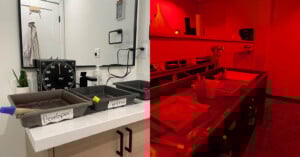
Darkroom printing has long been an increasingly forgotten part of film photography. Even with many new photographers picking up film in recent years, a lot of them seem to ignore the practice of darkroom printing.
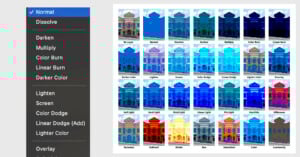
Photoshop can feel infinite. It’s a lot like a high-tech espresso machine or a sports car: you don’t have to use all of its features for it to be functional, but when you can, it’s a powerful tool.
This article is a little guide on how I have had luck shooting photos at concerts. This is by no means the only way to do it, nor can I say that it will be the best way to do it for everyone. All I can say is that I recommend bringing a 35mm camera into some concerts. It really is a fun way to document your night!
Dune: Part II was recently released in theaters, garnering positive reviews from movie-goers and reviewers alike. Over at Kolari, we were hyped to see infrared photography used in one of its most visually stunning movie sequences in recent memory.
As photographers moved from film to digital photography, they gained a new flexibility that changed the entire process. However, what was lost in that transition was a need for a more tangible connection to images that only a printed photo can provide.
For years photographers have been able to make images of the same person in different settings. And now AI can do the same.

Texture layers are photos that are normally blended with other images as part of a composite rather than being used on their own. They can be color, monochrome, detailed, or blurred. The idea is simply to add an extra level of interest to a picture. In this guide, we will look at various ways of collecting and using texture layers for your photography projects.

Many serious photographers say you must calibrate and profile your monitor, and maybe they’re right. But most camera users in this world enjoy their pictures without getting bogged down by such technicalities.
Adobe Photoshop contains a very broad and deep set of tools for making edits and adjustments to images. While there is little limitation to what can be achieved using the native tools available in Photoshop for more than two decades, they may not be as intuitive and user-friendly to photographers who have spent most of their time editing raw images in Lightroom.
The sky is a key element in landscape photography, as it can create mood and depth in your images. However, many beginners tend to overprocess the sky, making it look unnatural and fake.
One of the most exciting consequences of the advancement of technology is the democratization of tools that were once reserved for big-budget productions.
This landscape image has most of the ingredients that can make it a great photograph. It has a clear subject and focal point, the lighting is great, and a nice edit and mood, but… don’t you have the feeling that there is something off, and at the same time you can’t really tell what it is?
Levels often seems like a boring old tool in photo-editing programs. Maybe you’d use it to quickly fine-tune contrast by dragging the left and right sliders inwards. But it’s good for much more than that.
A common challenge for photographers using wide-angle lenses is creating depth in their images. The shots may seem flat and dull if they do not have a distinct point of interest and a clear visual path that draws the viewer’s eye into the scene.
Shooting the busiest scenes we encounter while traveling in Asia can be very challenging. After 15 years of running photography tours and teaching in the area, I know that busy markets and streets can either be a photography heaven or a nightmare.
It's no secret that most photography equipment is expensive and typically highly specialized. But that doesn't always need to be the case. In the above video from Adorama, photographer Gavin Hoey walks viewers through how to create studio portraits using a simple sheet of cardboard and some studio lights.
Last week, Apple released its latest iOS update, and with it the new Journal app. While Journal seems simple, it can actually be quite handy for managing photography shoots and other projects.
Wherever you are right now, take a moment to look around. What patterns and shapes do you see? What objects, scenes, buildings, or other designs just look like they “make sense?”
Drones are awesome. Much more than just being fun novelties you might see buzzing around your neighbor’s backyard piloted by a young child, they are amazing creative tools that allow for camera shots that you simply cannot get in any other way, and are used in everything from music videos to live sports to the biggest blockbuster films.
Photography is unique, as far as artistic media is concerned. Behind the camera, we can freeze time, turning once-in-a-lifetime moments into indelible mementos that have a good chance of outliving the gear that created them.
I was interested in seeing how well a pinhole would work on a small sensor (APS-C) DSLR so I decided to give it a try. All I needed to do was to drill a hole in the spare body cap, darken a piece of aluminum foil with a permanent marker, punch a small hole in it, and then tape it to the front of the body cap.
A decade ago, I stumbled upon a page where someone detailed their process for crafting their own instant film, something similar to Polaroid Type55 or the New55. At that time, the instructions seemed too complex for me to tackle, and I never ventured into the world of instant film creation.
It’s been a while since my last article on drone photography (2019 to be precise). Since then I’ve used lots of DJI drones. Earlier this year I bought a Mini 3 Pro to see if this could potentially replace bigger drones for my travels. And I have to be honest: I didn’t like it at first.
Outdoor engagement photography is one of my favorite aspects of being a wedding photographer. I get to shoot environmental portraits in beautiful places without the constraints of a wedding day. Additionally, I get to spend time with my couple getting to know them and their interests in a low-pressure environment.