Do Your Images Mean Anything? Should They?
As photographers, we often concentrate on technical perfection and the compositional layout. However, arguably more important than either of those is adding meaning to your photos. It can be challenging, but adding meaning can genuinely elevate your photos to the next tier.
First Steps in Adding Meaning
Photographers have adopted the methods artists use to imbue their work with meaning. The obvious way is to depict emotions. A photo of someone crying can very easily evoke feelings in the viewer. However, meaning can also come from symbolism, like light and shadow representing good and evil.
Meanwhile, some photographers adopt the Surrealists’ dreamlike imagery to explore aspects of the unconscious mind. For example, Francesca Woodman used blurred figures and confined spaces to evoke the feeling of vulnerability. For others, meaning can be found in the glory of nature or the precision of architecture.
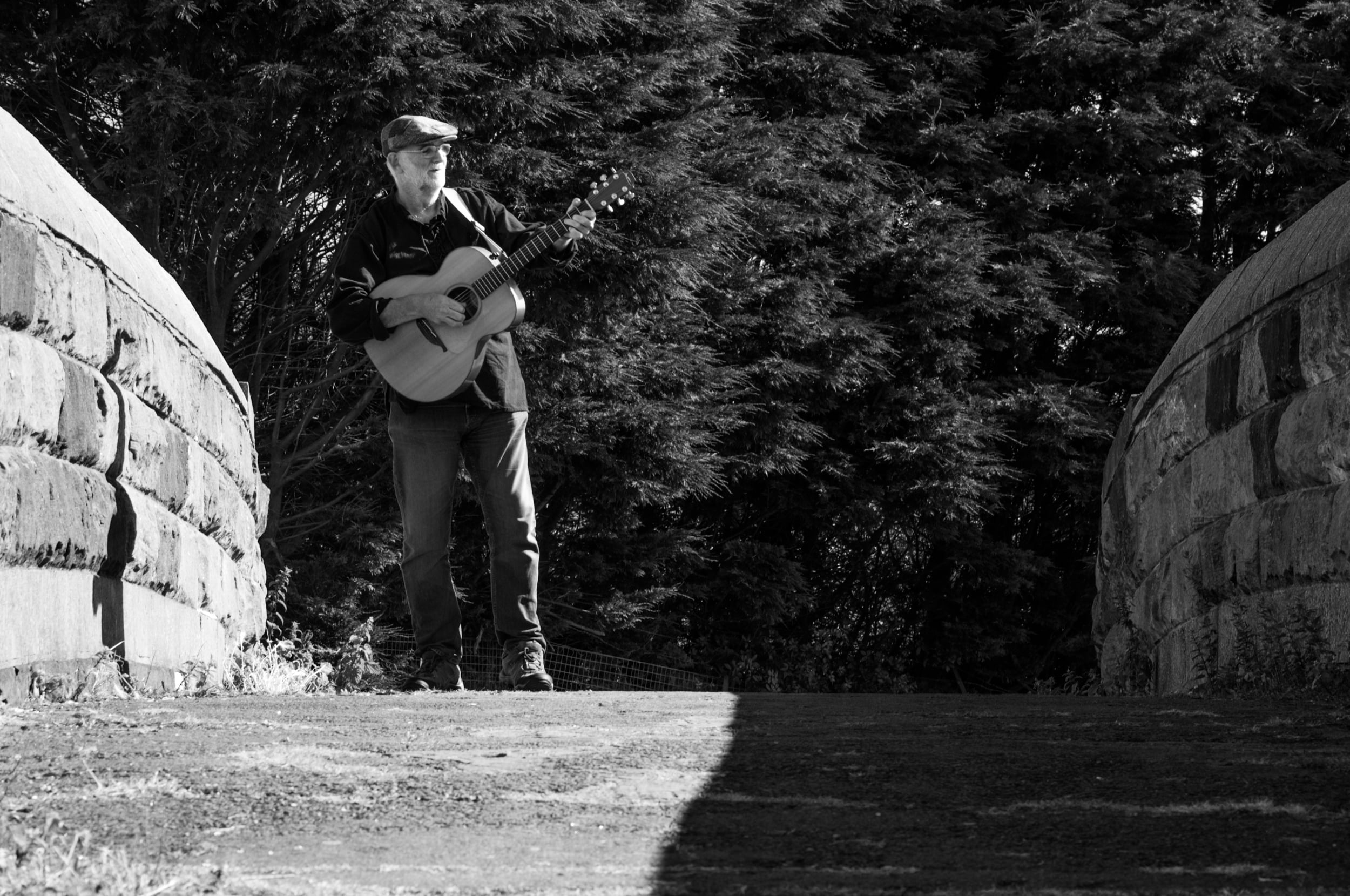
The Different Levels of Meaning
No matter the intention of the photographer, the meaning in any photograph is inferred by the viewer. That brings a problem. They might not have the experience or imagination to find any meaning, let alone the one you intended. You might create what you think is the most emotionally charged or academically challenging photograph you have ever taken. However, if the viewer lacks the mental capacity to see it, then the photo will be a simple depiction of a subject.
Your Photos Intended Meaning is Not What Everyone Sees
Even if the viewer can see the meaning in your image, what they see is unlikely to be the same as you intended. Because of their unique personal life experiences, the way they view the world is, inevitably, different from yours.
We are all influenced by a particular set of life events that mould the way we view the world. Psychologists have found that even siblings who grew up together can have very different perceptions of their family life. So, we can hardly expect anyone else to share our outlook. Their mental state, belief systems, current personal circumstances, and every other factor that affects them will result in their interpretation of your photo differing from yours.
In other words, even if you take an image that has meaning to you, it doesn’t guarantee that the viewer will understand it in the same way that you do.
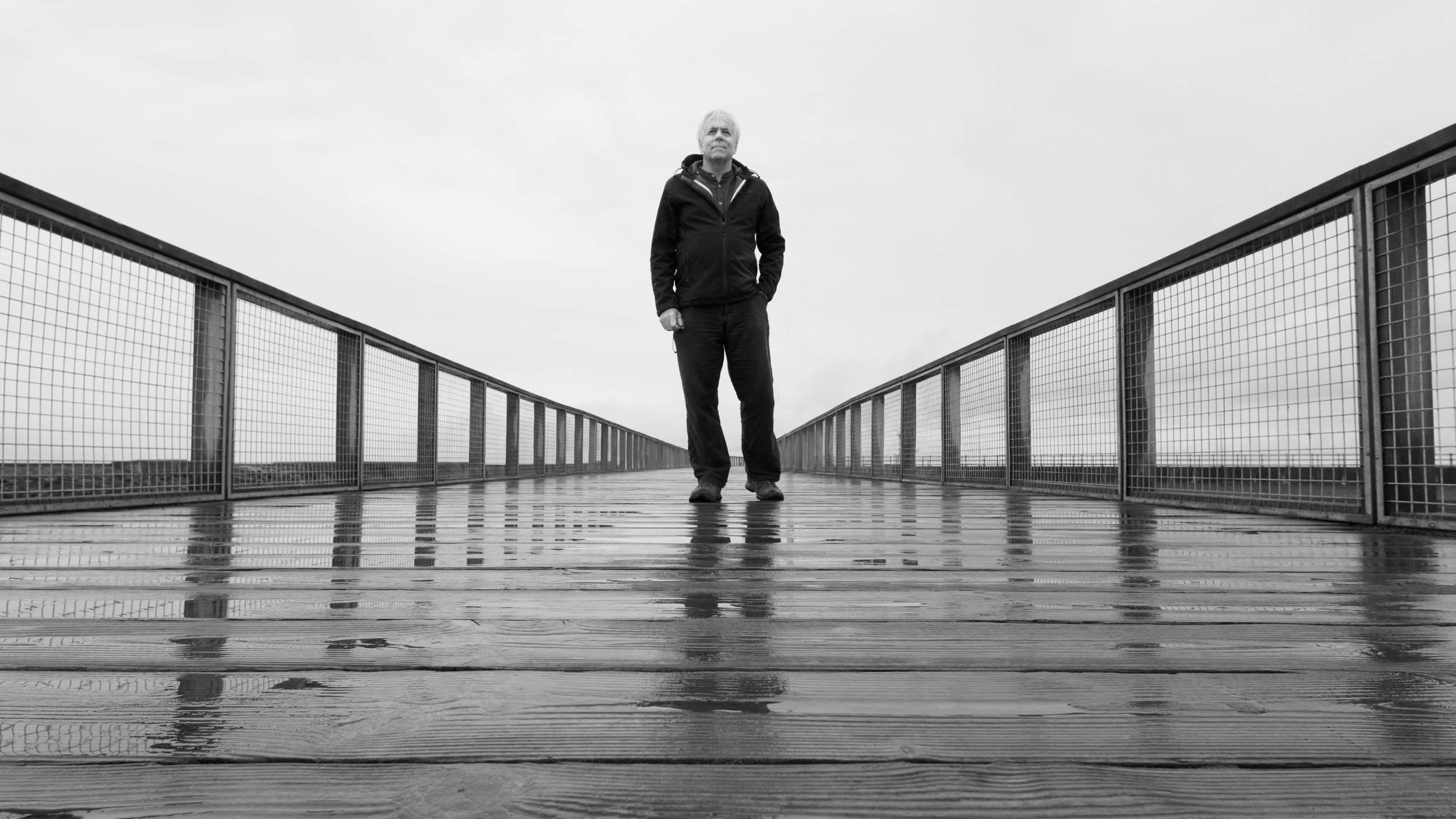
Not All Photos Need a Deeper Meaning
The accurate depiction of a subject is what most photography tutorials teach us to achieve. We get the focus and exposure just right and apply the compositional rules we have learnt, and bingo! We have a photo. As I said, at a base level, a picture is nothing more than that.
It may be the photographer’s intention to create such an image. Passport photos and those intended for, say, bird identification books are intentionally devoid of any meaning beyond identifying the subject. That is a deliberately shallow interpretation because we don’t want to distract from the image’s primary purpose. There is no challenge in the same way that can and should be found in other photos.
Nevertheless, it may be crucial for you to have thousands of Instagram followers. If so, unless you are a famous, talented photographer, you probably take unchallenging, easy-to-like photos that are part of popular culture.
There is nothing wrong with producing content that lacks academic or psychological challenge. People find it comfortable. After all, many use their time watching soap operas, game shows, and talent contests on TV because it’s effortless. Alternatively, they are “doom scrolling” on their phones, soaking up addictive, quickly forgotten content. Popular culture exists because everyone needs to be entertained.
It also plays a vital role in comforting people and distracting them from the world’s woes. Just as The Masked Singer plays its part in that, so does online content, including photographs.
However, some argue that TV shows and online content act like a mind-numbing drug, distracting and pacifying people when they should be working to make their world a better place.
So, if you want to add another layer of sophistication to your work, you might be shunning popular appeal.
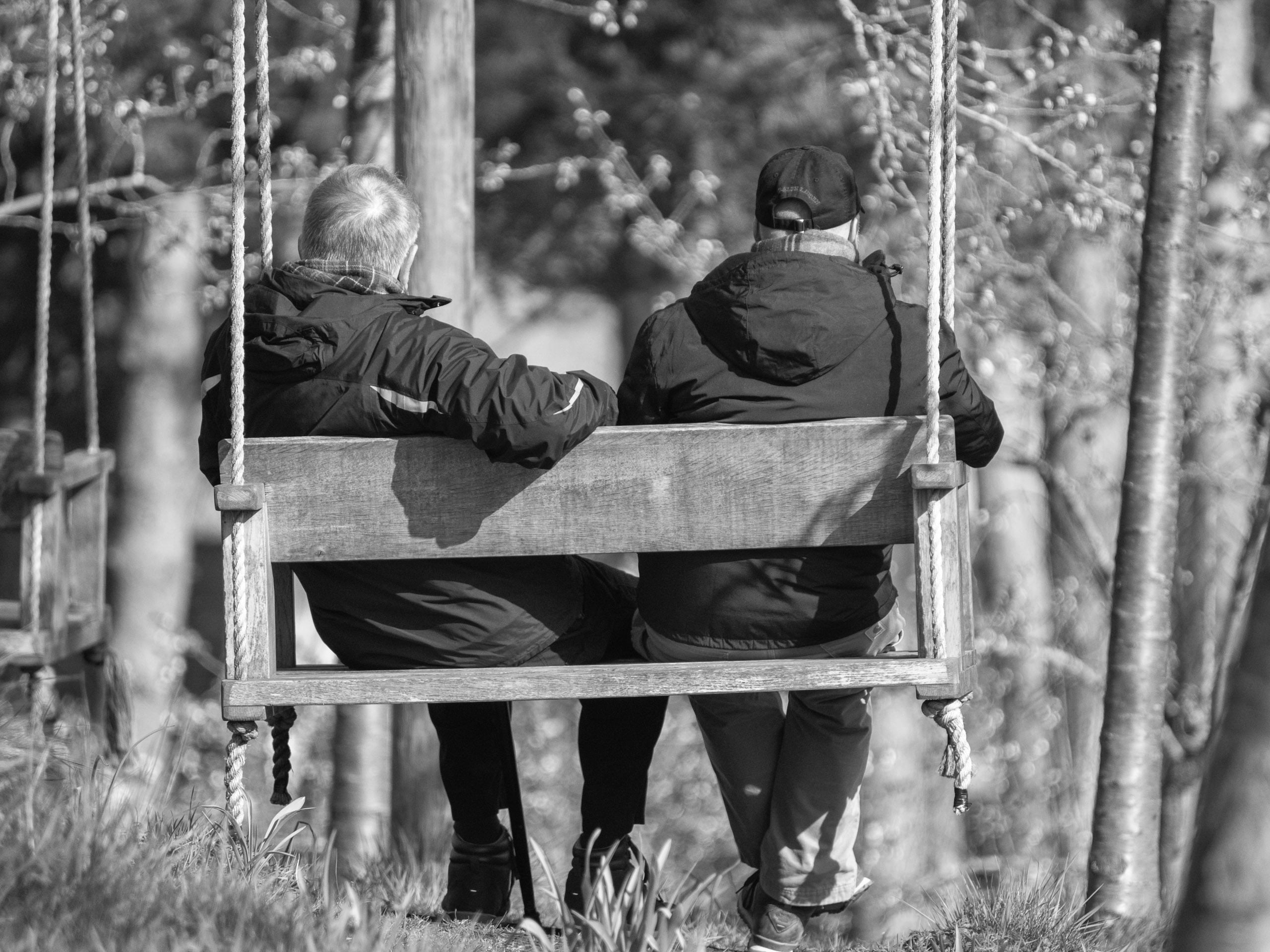
Meaning Beyond Simple Representations of Reality
The content of a photo influences the meaning people get from it. For example, varying colors can evoke different feelings. Red, for instance, can represent love and passion as well as anger and danger.
Similarly, an image’s layout can affect meaning, too. A photo might be tightly framed and cluttered, making it feel claustrophobic. It will project a very different meaning from one with plenty of negative space.
Meanwhile, juxtaposition can reveal hidden emotions or unconscious states. Elliott Erwitt used that to inject humour and social commentary into everyday scenes, and Manuel Ramos’ photos found striking oppositions in subject matter, such as natural versus artificial elements.
Some photographic genres can convey deeper meaning more easily than others. Images of people usually tell a story. That may be their personality, as suggested by their facial features in a portrait, or by their actions in street photography. Meanwhile, it is more difficult to give a landscape photograph a more profound meaning beyond its beauty when bathed in the glorious golden glow of morning light. That may be because a landscape itself doesn’t have feelings. It is hard to empathise with the inanimate.
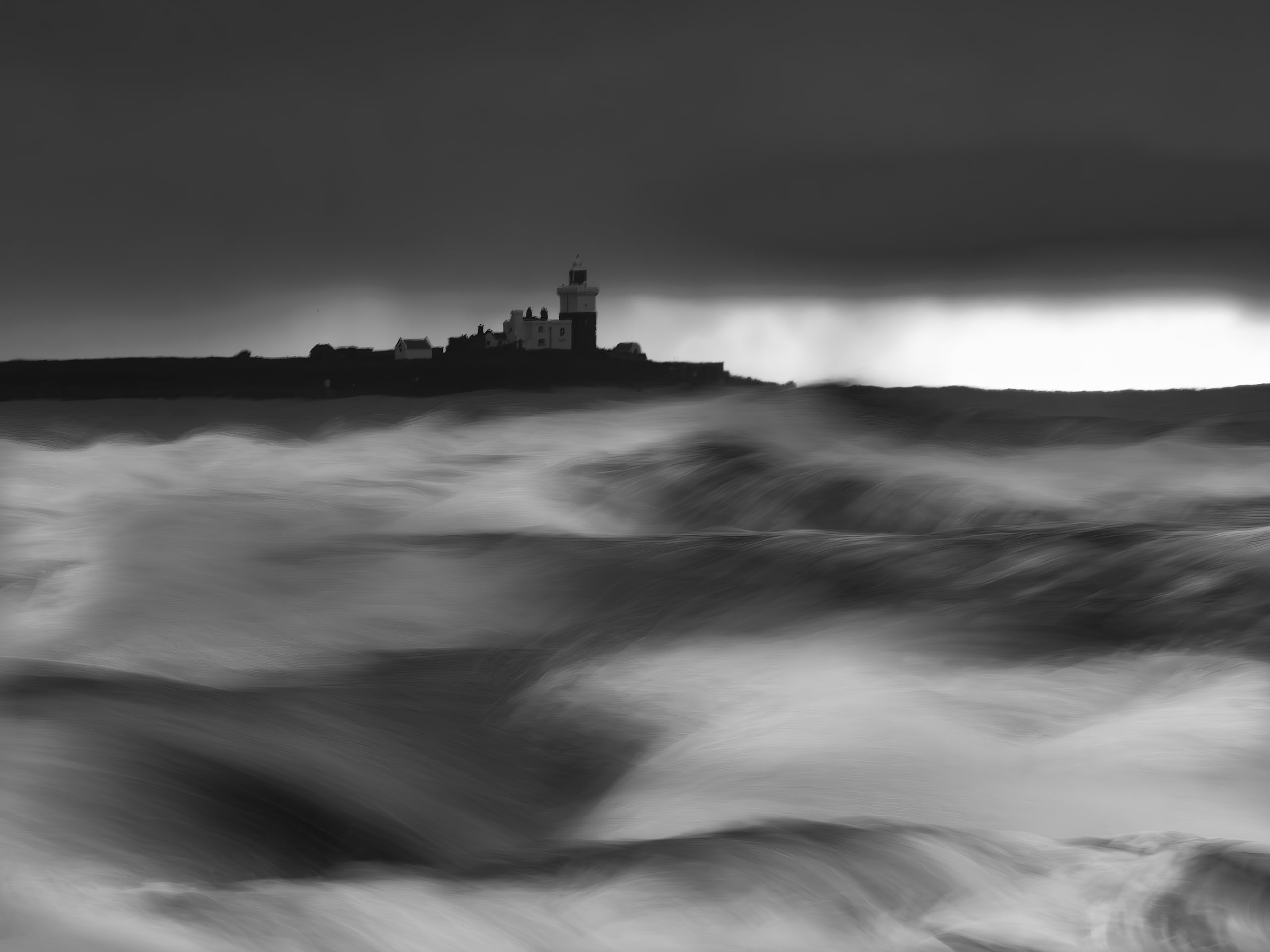
How Changing Attitudes Affect the Meaning of Photographs
The meaning of photos can change over time.
For example, Tim Gidal’s 1929 photo “In the Biergarten, Munich,” features Hitler sitting in an outdoor cafe. The distaste that exists for the Nazi leader that everyone in their right mind feels now would not have been universal back then.
Meanwhile, the photograph of Ernest Hemingway crouching next to the body of a leopard he has just shot and killed evokes very different feelings for many people from when it was first published.
For more recent examples, Google “Photos of Jeffrey Epstein at a party,” and consider how those photos of smiling friends take on a more sinister meaning now than they would have done a decade ago.
Adding Meaning by Breaking the Rules
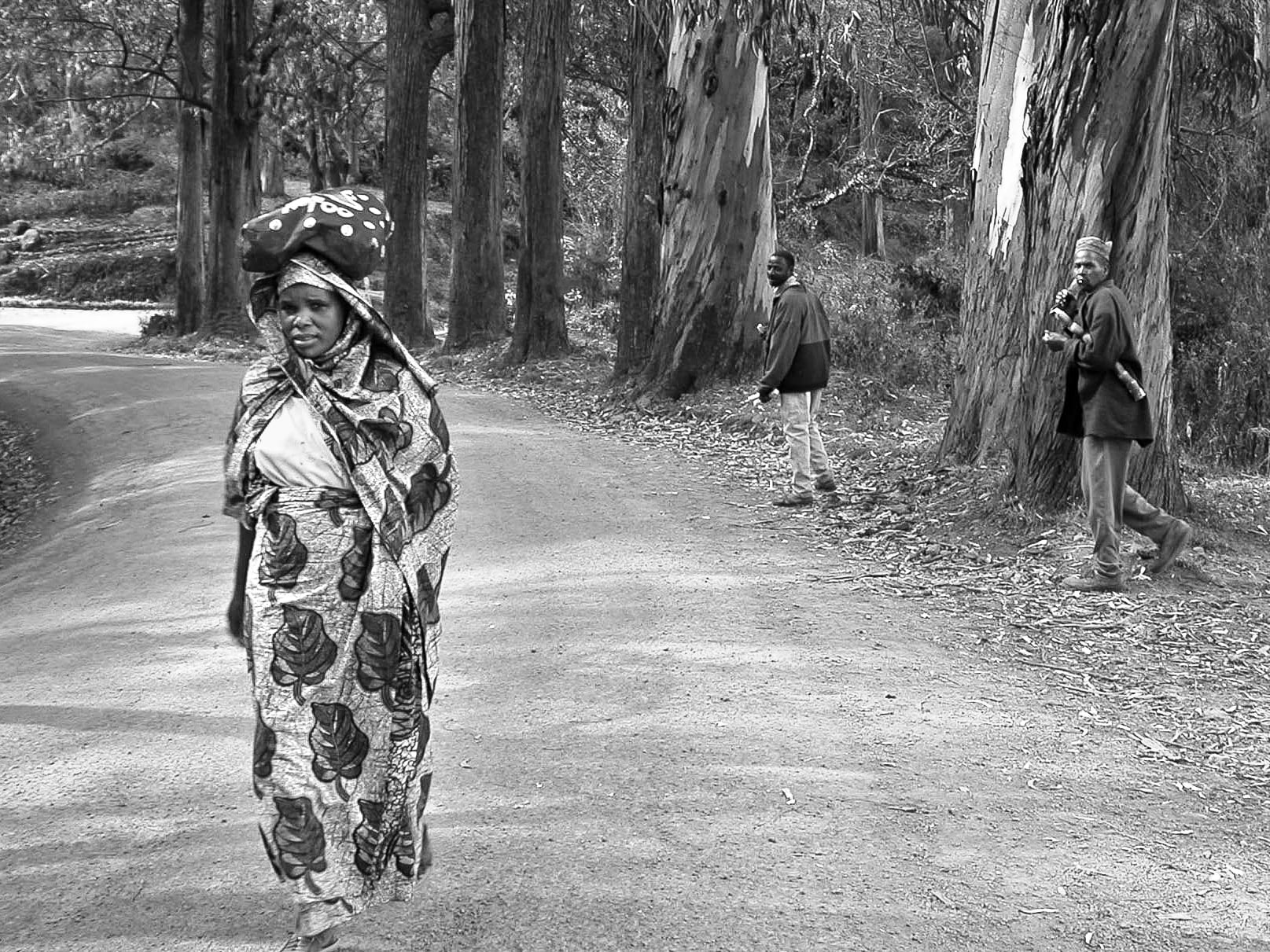
As creative photographers, we learn to see the world in ways most people don’t. Therefore, identifying our unique way of perceiving the world is crucial to giving a photo meaning. But that can mean not sticking to mainstream formulas.
Sometimes, being formulaic and keeping to the rules is necessary. For example, when I am commissioned to do work, my images must conform to my employer’s brief. Consequently, there is little creative wriggle room for creative experimentation. Similarly, wedding photographers need to supply pictures that meet the newlyweds’ expectations.
Outside the professional realm, many photographers stick to fixed formulae for taking photos. Familiarity is easy for others to like. But adding meaning can sometimes mean breaking away from the familiar.
Photograph Your Passion
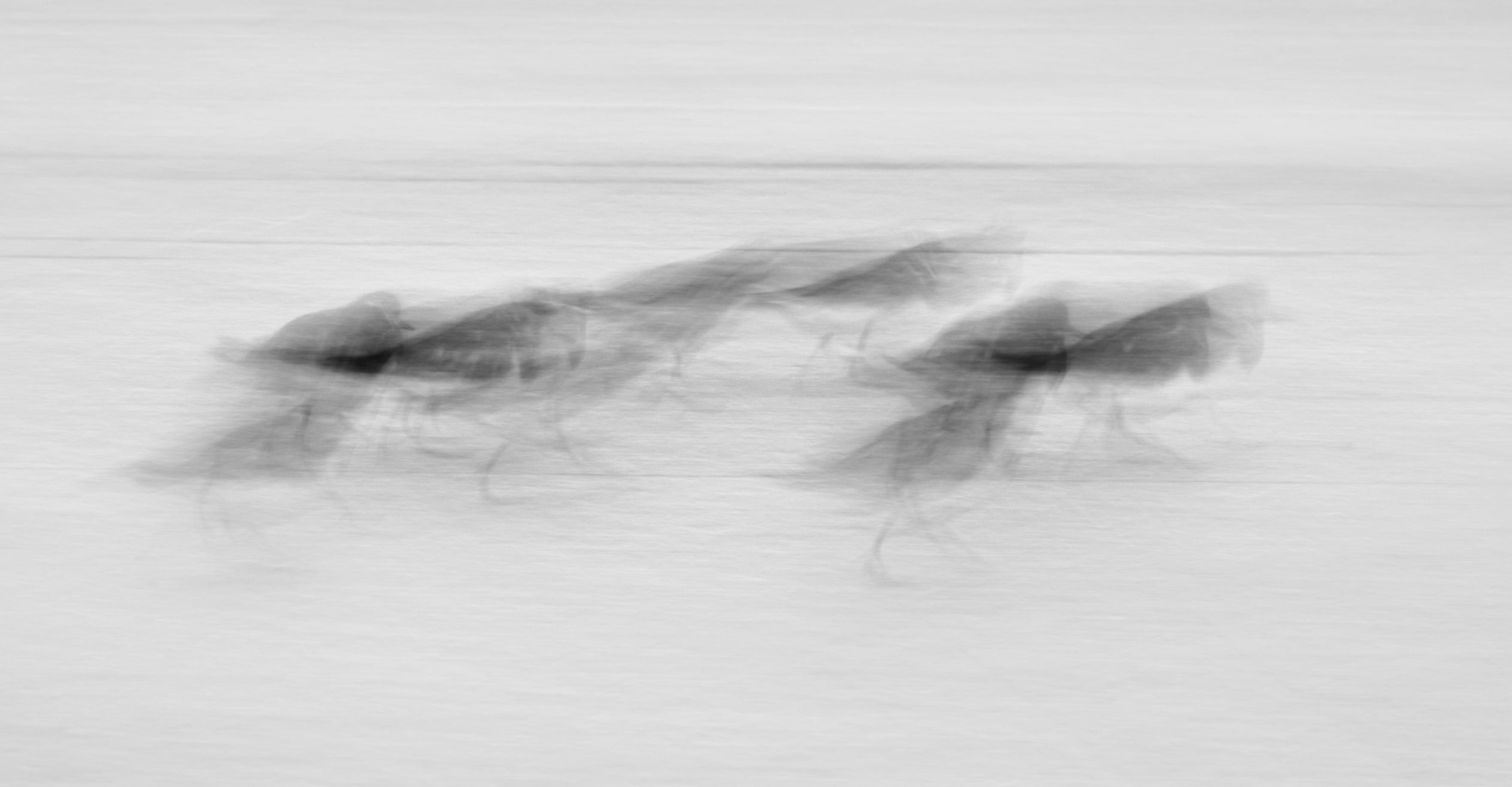
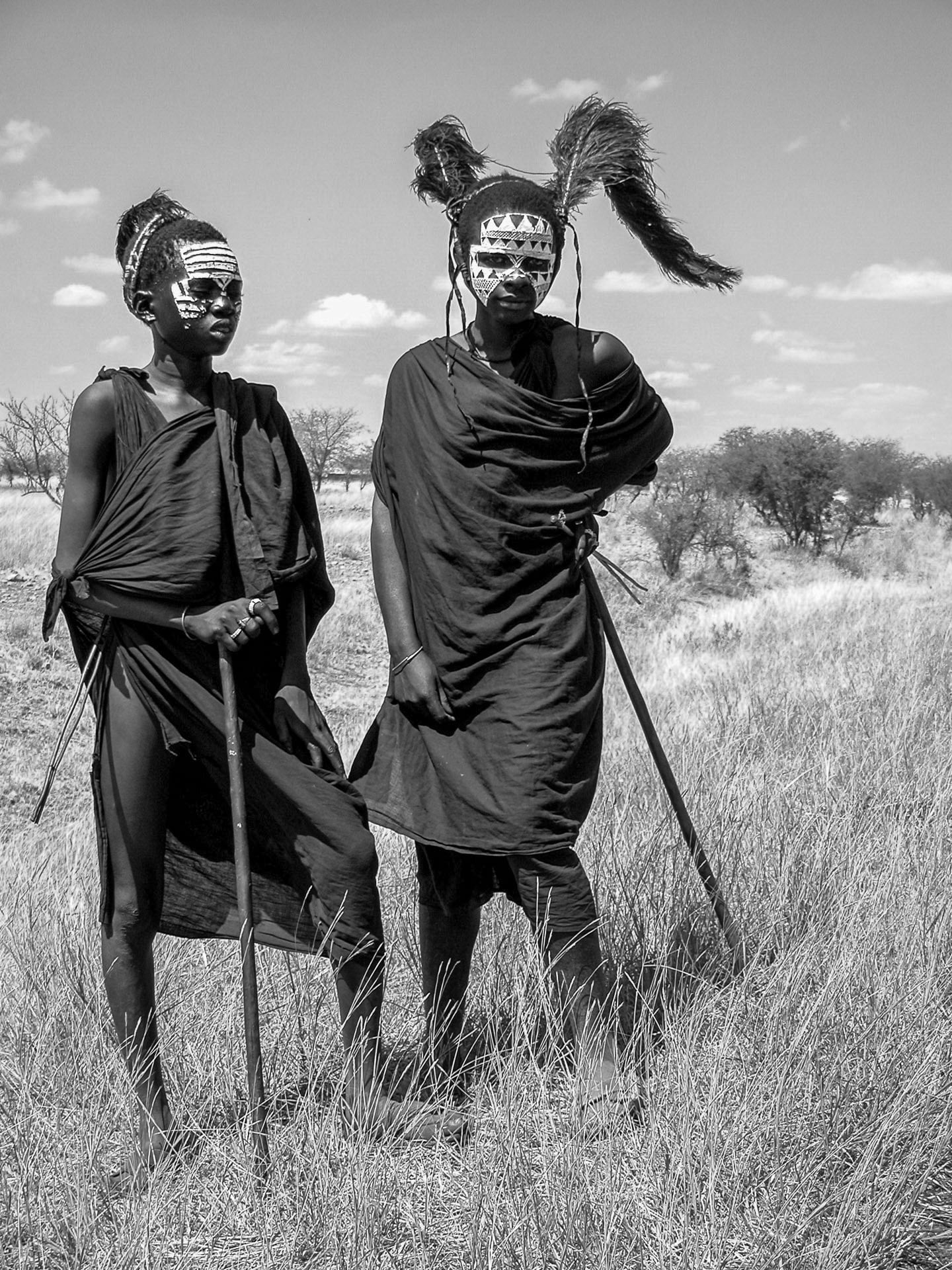
As I suggested above, a photo can be much more than a simple record of a subject. However, if that subject is something that you feel strongly about, then that strength of feeling can be apparent in the image. If you care about what you shoot, you will notice and include the small things that give the photo meaning. Your emotions, whether enthusiasm, love, empathy, anger, disgust, or concern, will be reflected in your work.
Conversely, if your subject holds no interest for you, others will notice it when they view your photos.
Photographers whose work depicted their surroundings with passion include Tish Murtha, Sebastião Salgado, and Dorothea Lange.
Your Actions Add Meaning to Your Photo
People can make up their own narratives about your photos, even if their stories aren’t true.
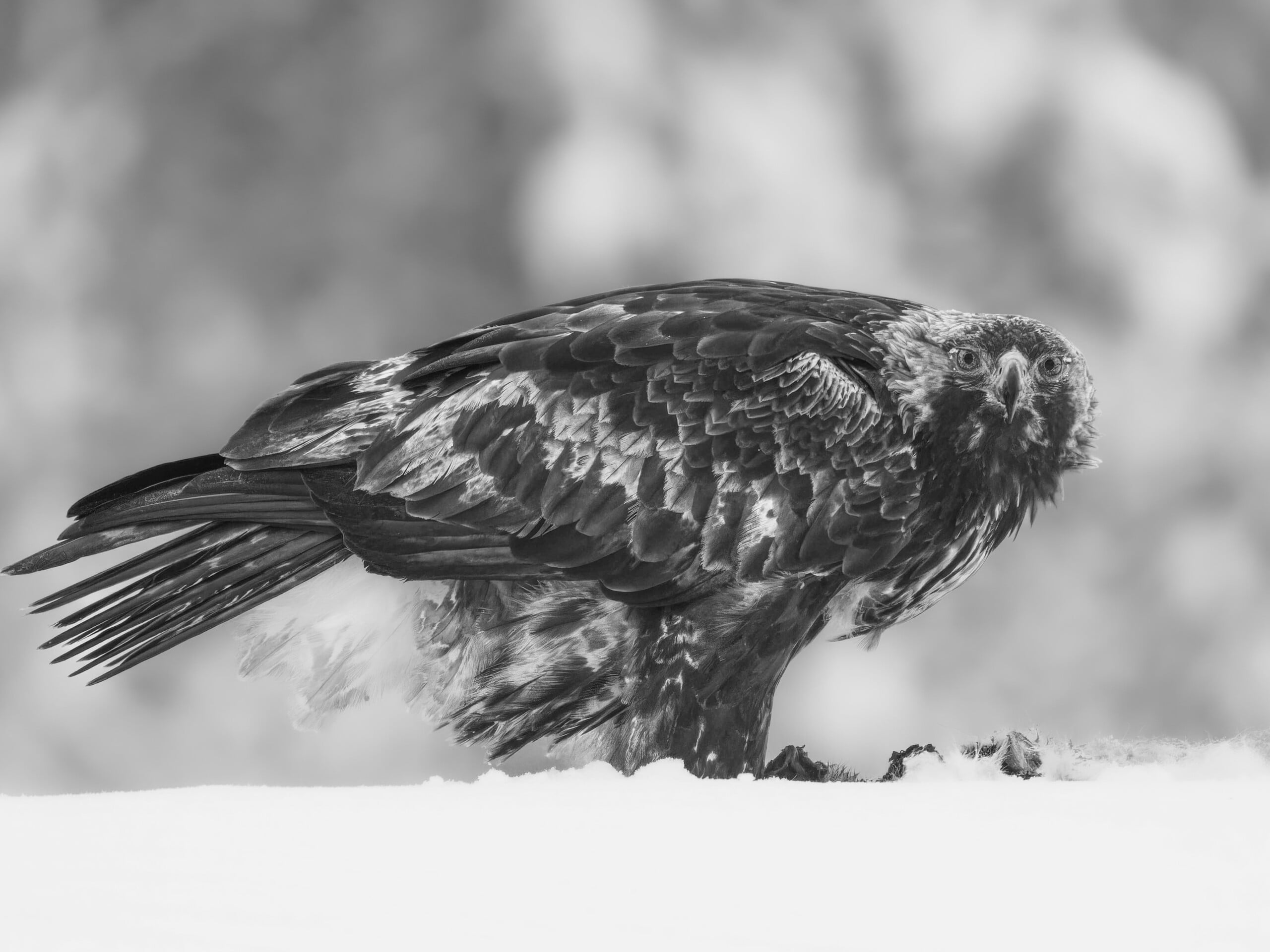
There is a fabulous wildlife photographer in Finland called Jari Peltomäki. He has some bird hides deep in the forest where people go to photograph golden eagles. I shared a photograph I had taken there a while ago, and an online troll immediately jumped on it. He angrily insisted that the bird had been baited to arrive there for photography, which he said was unethical.
Of course, there are always those who regularly spread derision and unfounded accusations, attempting to make themselves look better at someone else’s expense. Most people realise that trolls are only trying to compensate for their own inadequacies. Usually, their pitiful behavior is a failed attempt to bring others down to make themselves look better.
Indeed, the golden eagle was feeding on roadkill that had been removed and brought to the hides. Similarly, Jari takes the carcasses of euthanised pigs that were unfit for human consumption to feed the birds, too. But it is not a negative thing implied in the troll’s rant.
It is all part of a conservation project that has led to an increase in the eagle population. It has also reduced the number of these beautiful raptors being killed on the roads. Furthermore, the profits made from photographers visiting the hides are spent on thousands of bird boxes. Jari distributes them in young forests across Finland, where the trees have not yet developed holes in their trunks for birds to nest.
Your actions add meaning to the photographs. Your reputation will also affect how people read meaning into them. I have not yet met a troll who can take good photos.
Why You Should Repeatedly Photograph the Same Subject
Finally, the great Ansel Adams said, “Repeated returns are more rewarding than prolonged waiting for something to happen at a given spot.” Not only must subjects change from day to day, but familiarity also improves your ability to add meaning. The likelihood of discovering the best way to shoot a subject in a way that shows meaning is dependent upon how well you know your subject. Revisiting the subject repeatedly will help you to explore it and discover ways to add meaning to your photos.