There’s a Problem With Photographers’ Obsession With The Golden Ratio
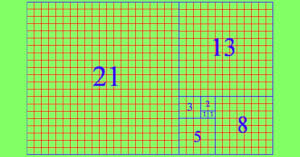
Claims made about the golden ratio in nature are often overstated or romanticized. In fact, it is more often a useful model than it is a universal law,
Claims made about the golden ratio in nature are often overstated or romanticized. In fact, it is more often a useful model than it is a universal law,

It may be commonplace to you, but your audience members may be unfamiliar with the things in your life. Consequently, to them, your ordinary subjects may seem exotic and unusual. However, there are other good reasons to photograph the commonplace repeatedly.

Originating in the early part of the last century, Gestalt Theory revolutionized the understanding of perception. It emphasizes how humans perceive what they see. So, how can we use it to improve our photography?
Leica counted down the days to Christmas in style, delivering daily videos that showcase "the most special things" in the company's archives. As is tradition, the photographic advent calendar of sorts concluded yesterday, Christmas Eve, and we thought a nice little Christmas present to our passionate readers was a recap of Leica's Christmas countdown.

Learning photography is a never-ending quest. Most of us are hoping to make our photos appealing to our audience. So what follows are five approaches we can employ to help achieve that.
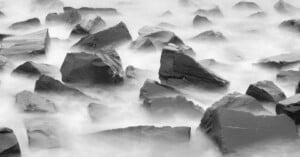
As photographers, we often concentrate on technical perfection and the compositional layout. However, arguably more important than either of those is adding meaning to your photos. It can be challenging, but adding meaning can genuinely elevate your photos to the next tier.
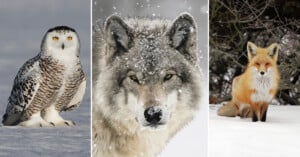
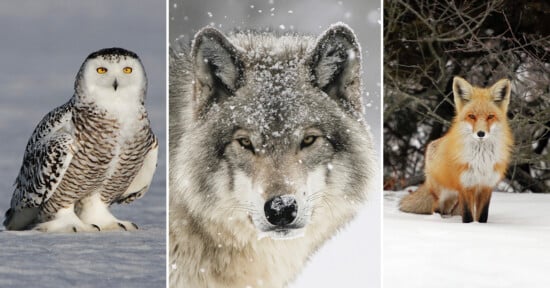
Master winter wildlife photography with expert tips on camera settings, gear, composition, and field strategies to capture stunning images of animals in snowy landscapes.

There have been significant improvements in photographic technology over the last 50 years. Although it helps us get ever-better photographs, there is an essential reason for going back to basics.

The most compelling photos are those that break away from the mundane. Therefore, you can achieve better results by photographing at atypical times of day and weather conditions. Here are some hints for doing that and avoiding some risks.
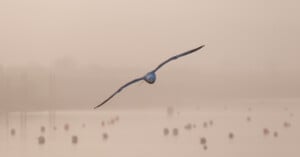
Depth of field refers to how much of the picture is sharply in focus. A skill you should hone is precision, because it can make an enormous difference to the success of your photos.

Digital photography is at a disadvantage when it comes to creativity, I argue; at least when compared to painting, drawing, sculpture, or music. However, there are lessons from history you can apply to overcome the hindrances we face and learn ways to help us grow creatively.

There are different types of color contrast, and how we use them radically changes the look and feel of our photographs. An often-overlooked aspect of photography, the various types of contrast play an essential role in creating our images. What are the different types, and how can we use them to improve our pictures?

Animal photographer Tim Flach has taken hundreds of photos of cats and, through his time with them, finds himself asking questions about why they are so important to humans. He has partnered with scientists to find out exactly why they elicit the emotions they do, and how he, as a photographer, can better highlight those aspects of their form.

Previously, I wrote about five elements of art and how they can impact our photographs. However, there are three more elements that work in conjunction with points, lines, shape, and form that can elevate your photography further.
The Professional Photographers of America (PPA), the world’s largest nonprofit photography association, has launched PhotoVision. This new streaming platform brings together more than 2,500 videos and 1,700 articles focused on the art, business, and inspiration of photography.
Photographer Chris McGinnis has never taken a macro photograph in the field with a tripod in his entire career as an OM SYSTEM ambassador. The reason is simple: mobility trumps stability when you understand the workarounds.

Merging multiple images into panoramas is a feature available in many editing programs and it is surprisingly easy to accomplish.
Photographer and technology expert David Imel recently published a video discussing why Leica got rid of the most iconic part of its M series cameras in the new M EV1: the rangefinder. But to do that, he first had to explain what a rangefinder is and how it works, and in doing so created the best modern breakdown of the technology that is very easy to understand.

Understanding the roles of the fundamental elements of art allows photographers to create compelling compositions. These elements are not merely aesthetic choices but tools for creating structure in your photography.

Travel photography is one of the most rewarding genres, as it allows you to use your image skills in new and exciting environments. But there is more to it than just creating vacation snaps. Here are some of my approaches to better travel photography during a recent visit to beautiful Albania.
Sony and Adorama are inviting photographers to their highly anticipated Rooftop Photography Events at Sixth Floor Loft in New York City. Over two consecutive days, October 26 and 27, attendees will experience hands-on sessions with Sony cameras, expert guidance from industry professionals, and the chance to capture striking rooftop imagery.

The design of an image is one of the most important aspects of photography, but composition is a vast and complex subject on which much ink has been spilled. It is well worth coming to grips with composition fundamentals, as they will transform your photography.
While smartphone cameras and standalone cameras (which are sometimes referred to as "real" cameras) are often marketed using the same terms, the way they each function is very different. In a video published to TED-Ed, electrical engineer Rachel Yang simplifies and explains why smartphones don't operate by the same rules that standalone cameras do.

There’s much more to exposure than just correcting for light. It’s one of the most powerful tools you can use creatively.

In this, the second in a series of articles about autofocus, we will look at different focusing modes and their practical applications.
Every few years, I write an updated version of the Film Grain Emulation guide. I do this because my passion drives me to learn more, and my understanding of film grain changes significantly.

There’s a lot more to focusing than many novice photographers realize. When they delve into it, it can seem complex. However, it is easy to master once you have found your way around your camera.

There are small pieces of information that can make a big difference to your enjoyment of photography and your success at taking better pictures.
A "blood moon" lunar eclipse will dazzle viewers this weekend, September 7-8, and provide photographers their second chance of 2025 to capture incredible total lunar eclipse images.

All great photographers in the past and present have had creativity at their core. There are proven links between personality traits and creativity. Therefore, modifying your actions can improve your photography.

Choosing the correct shutter speed is imperative. Here’s how it works and why you should take it into consideration when shooting any photograph.
Swiss manufacturing and craftsmanship have left their mark on a variety of fields, ranging from mechanical watches to sailplanes and, in the case of small but noteworthy endeavours such as those of Monteverdi, even luxury sports cars.

In my previous article, we embarked on an adventure that started with a basic understanding of metering and exposure. Hopefully, you appreciate how the camera measures light and how its aperture, ISO, and shutter speed can be balanced to expose the image correctly. Each of those changes the way the image looks, and here’s what the aperture does.

Photography requires greater technical understanding than any other art form. I’ve been teaching people at all levels of photography for well over a decade. At the start of each workshop, I always begin by explaining metering and basic exposure settings. A major foundation of good photography, these settings are often the least understood, but they are among the easiest things to get right.

It’s getting ever more challenging to earn a living from photography. It is especially difficult to start a photography business now. So, here are some of the barriers you may meet and how to overcome them.
I consider myself lucky as I earn my living from photography. It’s not a profession that is going to make me rich, although it keeps the wolves from the door. Moreover, I love what I do.

It is tempting to be drawn in by marketing hype and buy the camera with the most enticing advertisement. Or you might go along with what a friend has. Alternatively, you could consider the choice in Walmart and pick up the cheapest model. All of these could be bad decisions.
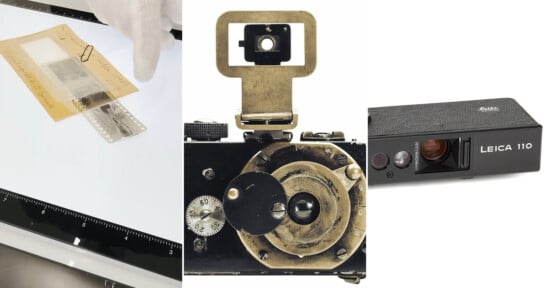
This year, the world celebrates the 100th anniversary of a camera that revolutionized photography: the Leica I. Often called the Leica Standard, this compact 35mm rangefinder was introduced at the 1925 Leipzig Spring Fair and marked the beginning of modern handheld photography. It didn’t just represent a technological leap -- it sparked a cultural and artistic movement.

Newborn photography is one of the most beautiful yet delicate branches of photography. It is a field that combines artistry with significant ethical responsibility. Newborns are among the most vulnerable subjects to photograph, and even the slightest negligence can result in serious and irreversible harm.
Tamron Americas launched Tamron University, an online series of free classes led by professional photographers and filmmakers. These new multi-part courses are designed to help beginners and enthusiasts improve their skills and learn valuable business skills that can help them become successful pros.
During decades of seismic change in media, mid-career visual journalists supported by the John S. and James L. Knight Foundation returned to college to learn new skills, earn master’s degrees, and share knowledge with younger students.
If you’re someone who makes a living by creating things with your computer, or even an enthusiastic hobbyist, chances are that eventually, you’re going to need more room to store all of your stuff than can be provided by the drive(s) built into your computer. Arguably more importantly, if you’re especially attached to some of the work you’ve done and would like to protect it from loss, you’re going to want some method of backing up your data.
Color grading is a crucial creative adjustment that enhances storytelling and evokes emotions. In portrait photography, it plays a significant role in establishing the mood of the subject. This article explores how to craft color grading in portrait photography, from sourcing inspiration to achieving the final result.
No matter what skill level you're at, PetaPixel has educational guides to help you create vivid, masterful fireworks photographs. This how-to offers five creative fireworks photography techniques to elevate your shots beyond the basics, including a Grand Finale trick perfect for capturing unique, expressive images that stand out from the crowd.
Autofocus (AF) is one of the most significant advancements in the history of photography. From the first autofocus camera -- the Konica C35 AF in 1977 -- to the first true autofocus ILC, the Minolta Maxxum 7000. Although manual focus still has its devotees -- especially in genres that reward deliberation, such as macro, landscape, or vintage shooting -- autofocus has become the default expectation for most modern photographers.
In 2012, beneath the unassuming asphalt of a Leicester City Council car park, history stirred. Archaeologists and historians from the University of Leicester, in collaboration with amateur enthusiasts and the Richard III Society, undertook a dig many thought more symbolic than scientific.
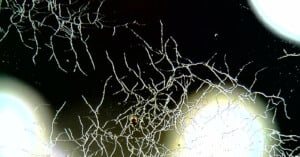
Pick up a dusty old lens from a flea market, an estate sale, or even your own forgotten storage bin, and you might notice something strange glinting beneath the surface of the front element: delicate white threads, odd patterns like spiderwebs or frost creeping across the inside of the glass. That eerie substance is lens fungus -- an unwelcome guest in the world of photography that quietly invades optical systems, thrives in darkness and moisture, and, if left untreated, can cause permanent and costly damage to your equipment.
To cap off its duo of wildlife-focused YouTube series In Search of Nature and Framed in Nature, BBC Earth has published a 45-minute supercut tutorial titled "How To Take Stunning Wildlife Photographs" for free.

Photography is as much a science as it is an art, and nowhere is that more evident than in the construction of camera lenses. Behind every sharp image is a complex array of glass elements, coatings, and design choices that collectively shape how light is captured.
The following article is a resource to help the world’s photography competition judges work out if the “travel” images they are judging are real or not! Yep, this is the first library of fake travel photos focusing on people photography in Asia. You’re welcome!

A pair of detailed video lectures provide a fascinating insight into the mechanisms of CMOS image sensors -- the technology featured in nearly every modern digital camera.