US Government Bans New DJI and Other Foreign-Made Drones
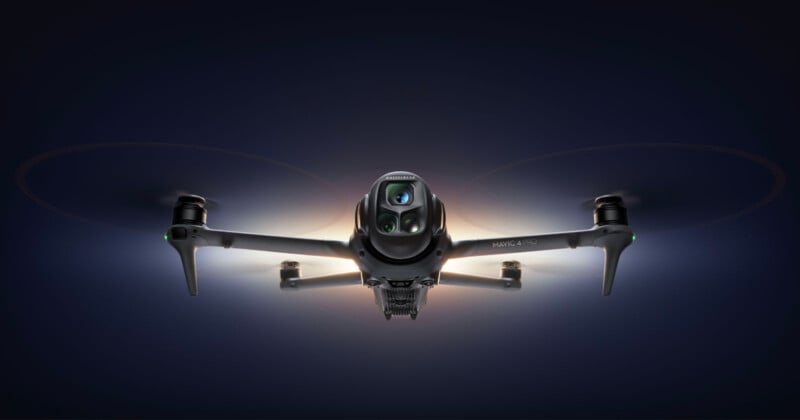
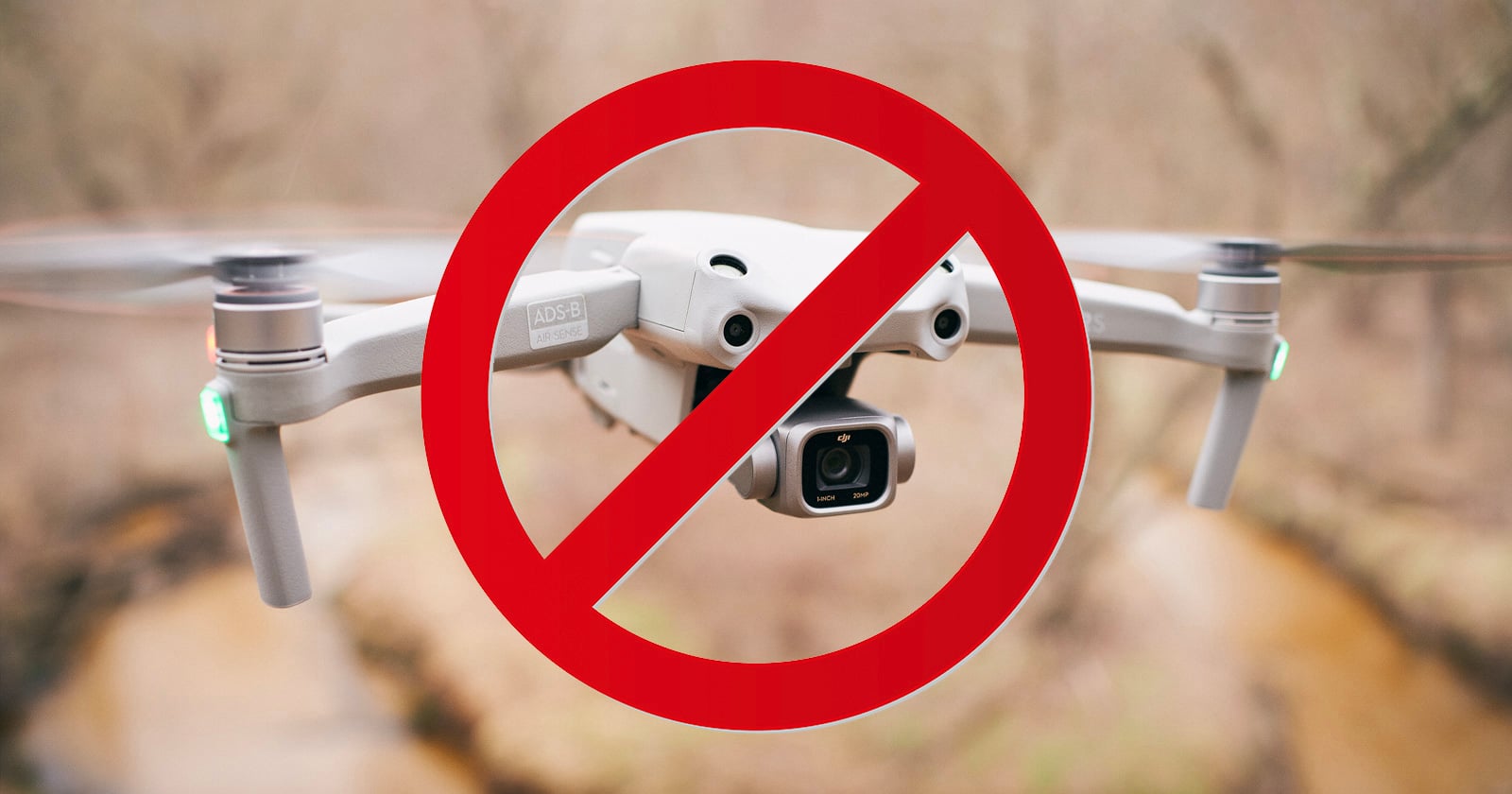
The Federal Communications Commission (FCC) announced late Monday that it would add DJI to its “Covered List,” effectively banning all future DJI drones from the United States. A disappointed DJI says it remains committed to the U.S. market despite the ban.
In its press release, the FCC explains that foreign unmanned aircraft systems (UAS) and critical components for UAS will be added to the FCC’s “Covered List” moving forward, in a move to “greatly enhance public safety and innovation.” The FCC adds that “criminals, hostile foreign actors, and terrorists” can use unmanned aircraft systems — drones — to “present new and serious threats to our homeland.”
This is not strictly an FCC move, as it builds upon President Trump’s new Restoring American Airspace Sovereignty Executive Order issued back in June. Nonetheless, while the FCC may have jumped the gun slightly on its DJI ban, the company’s future drones and drone components were facing a ban starting today anyways, due to the FY25 National Defense Authorization Act (NDAA).
As part of that law, which passed with bipartisan support in Congress, DJI and other affected companies were supposed to receive security audits by authorized federal agencies. DJI urged the U.S. government back in April to begin the mandated security audit, and did the same again in June. Earlier this month, DJI issued its final plea to the government to conduct its mandated security audit. DJI has always remained confident that it would pass any such audit, repeating time and again that its products would withstand government scrutiny.
As the FCC’s new press release demonstrates, this audit never happened. Citing another of President Trump’s Executive Orders, “Unleashing American Drone Dominance,” the FCC says that “relying on foreign-made UAS threatens national security.” It seems clear that the goal was always to restrict foreign-made drones.
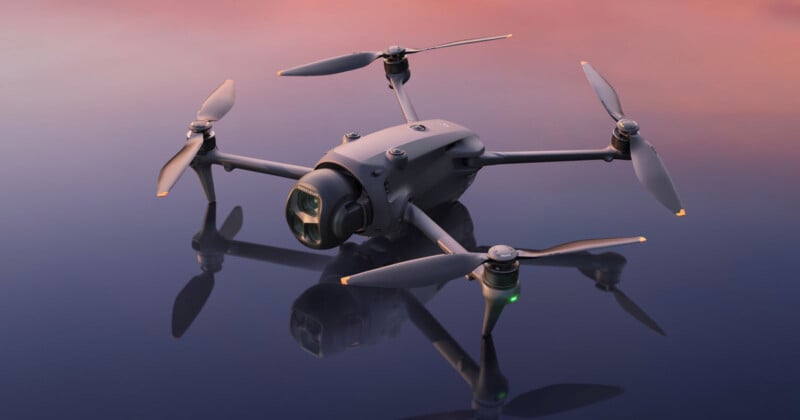
The FCC also says that on December 21, “following a thorough review by an Executive Branch interagency body with appropriate national security expertise that was convened by the White House,” it received instruction that drones and critical drone components produced in foreign countries pose “unacceptable risks to the national security of the United States and to the
safety and security of U.S. persons” and should therefore be added to the FCC’s Covered List.
To be clear, DJI and other foreign-made drones and drone parts will now be added to the FCC’s Covered List by default. Any products on this list cannot be legally imported into the United States. This is effectively a ban.
The only exceptions are in cases when the Department of War or Department of Homeland Security specifically singles out a drone or drone part as not posing a risk. At this time, the drone can be removed from the Covered List and then legally sold in the U.S.
Speaking of the Department of Homeland Security, the Department of the Interior, which is under the direction of the Department of Homeland Security, has already gone on record as saying that anti-DJI regulations hurt its operations.
“I welcome this Executive Branch national security determination, and I am pleased that the FCC has now added foreign drones and related components, which pose an unacceptable national security risk, to the FCC’s Covered List. Following President Trump’s leadership, the FCC will work closely with U.S. drone makers to unleash American drone dominance,” FCC Chairman Brendan Carr said.
One such company poised to benefit from the new regulations is American drone maker Unusual Machines. Donald Trump Jr. joined its advisory board following President Trump’s victory at the ballots in late November 2024. The company’s stock prices have soared since then, and rose again today following the FCC news.
DJI’s Response
As expected, DJI is extremely disappointed with this decision. A DJI spokesperson emailed the following statement to PetaPixel:
DJI is disappointed by the Federal Communications Commission’s action today to add foreign‑made drones to the Covered List. While DJI was not singled out, no information has been released regarding what information was used by the Executive Branch in reaching its determination.
As the industry leader, DJI has advocated for an open, competitive market that benefits all US consumers and commercial users, and will continue to do so. DJI products are among the safest and most secure on the market, supported by years of reviews conducted by U.S. government agencies and independent third parties. Concerns about DJI’s data security have not been grounded in evidence and instead reflect protectionism, contrary to the principles of an open market.
Today’s development will not affect customers who already own DJI products. These existing products can continue to be purchased and operated as usual. The FCC’s fact sheet also indicates that new products may, in the future, be cleared for launch based on determinations made by the Department of Defense and the Department of Homeland Security.
DJI remains committed to the U.S. market. We are deeply grateful to users across the country who spoke up to share how DJI technology supports their work and their communities. We will keep our community informed as more information becomes available.
As DJI notes in its statement, all existing owners of DJI drones can continue to use their drones within the United States. And, in a small sliver of optimism, DJI remains hopeful that at least some future models may receive an exemption by the Department of Defense or Department of Homeland Security.
PetaPixel’s Take
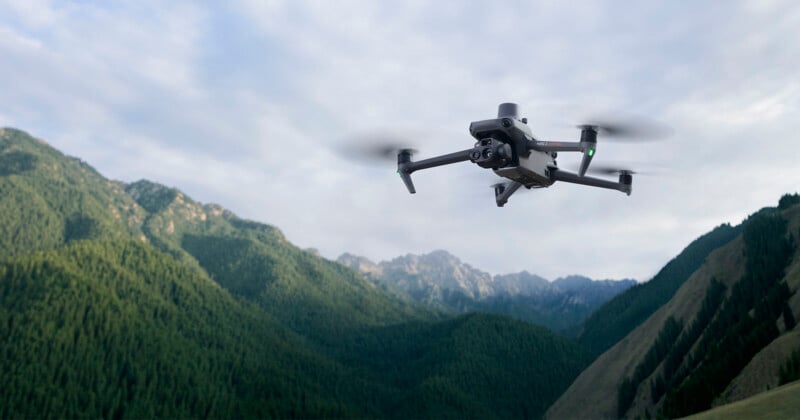
While DJI may be optimistic that future drones may be approved for sale in the U.S. under the current law, that is far from guaranteed. Given that the U.S. government never initiated the mandated security audit this year, it is evident that this new ban was a foregone conclusion. As DJI says, despite passing other independent checks in the past, it never even had a chance to demonstrate its security and safety to the U.S. government this year.
As public safety agencies and the U.S. Department of the Interior have explained, this new ban on DJI and other foreign-made drones is potentially bad news for public safety operations, including search and rescue. DJI drones are particularly good, and there are no other drones on the market, American or otherwise, that are as well-regarded. It is not like this new law will birth a brilliant U.S. drone industry overnight. That is not how it works.
The U.S. federal government claims it has made America safer by effectively banning new DJI and other foreign drones. The truth is not so clear. Is this economic protectionism under the guise of national security? It wouldn’t be the first time. It will be fascinating to see how this new system plays out and which, if any, new foreign drones receive exemption and can be legally imported into the U.S. in 2026 and beyond.
A Concerned Citizen’s Take
Following news of the ban, a concerned citizen, Jamil Silver, emailed PetaPixel and others outlining immediate worries of the consequences of DJI being added to the FCC’s Covered List.
“DJI drones are widely used by small business owners, real estate professionals, photographers, construction companies, emergency responders, and recreational hobbyists across the United States. A ban would disproportionately harm law-abiding Americans who rely on these tools for their livelihoods, creativity, and education,” Silver explains, echoing sentiments made by many other Americans.
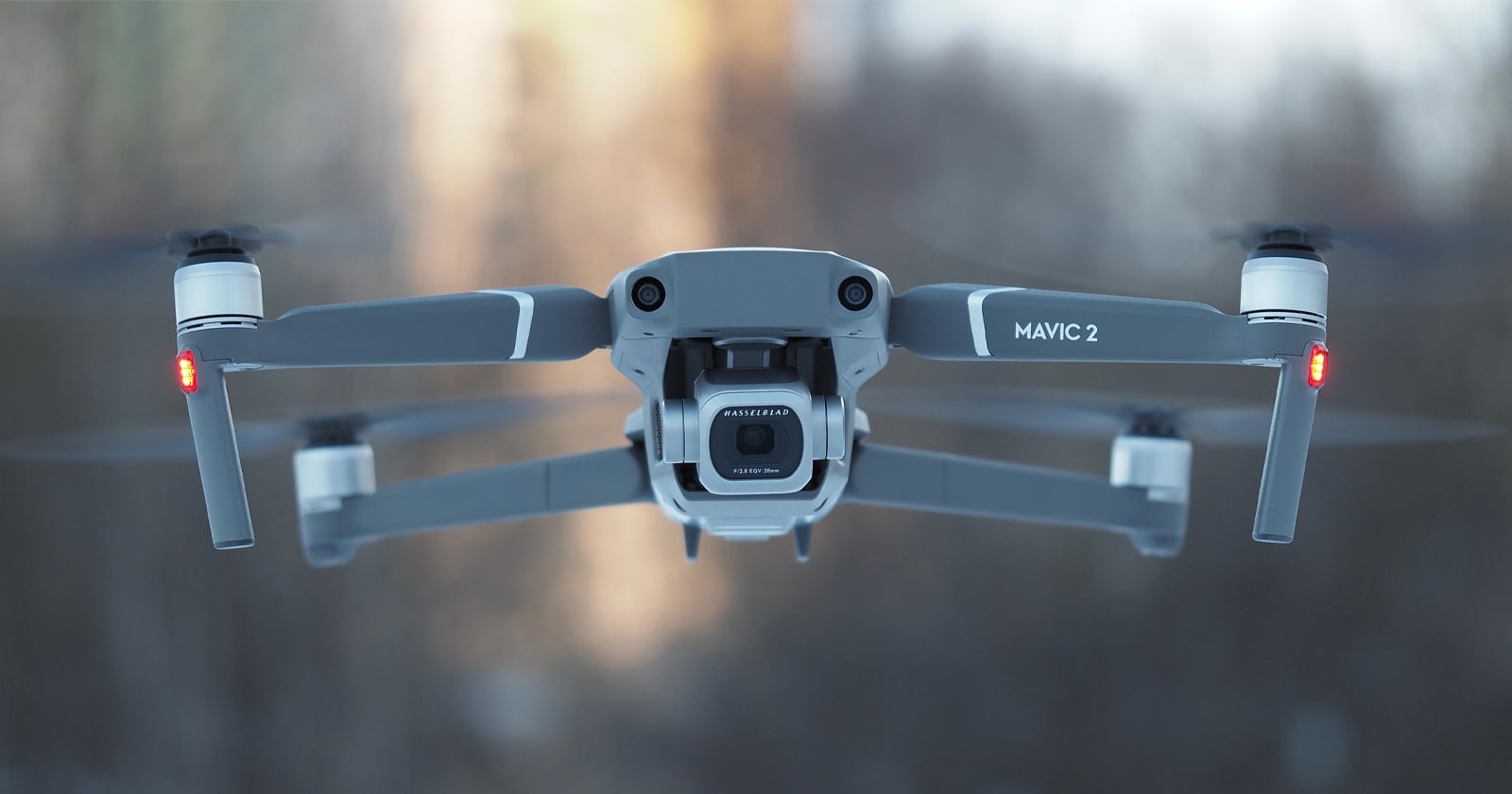
“Many of us have invested thousands of dollars into DJI equipment, training, licensing, and FAA compliance. Myself I own and record on a DJI Mini 3 Pro Fly more with filers and a Mavic as my first drone. Punishing American users for geopolitical concerns without clear, transparent evidence of wrongdoing sets a dangerous precedent and undermines trust in fair governance,” Silver continues.
Silver continues, expressing that if data security is the primary concern, then regulation and transparency requirements could have worked in place of an outright ban.
“Blanket bans restrict consumer choice, stifle innovation, and hurt small businesses far more than they improve national security,” Silver says.
Image credits: DJI