AI Image Generators Resort Back to the Same 12 Photo Styles, Study Calls It ‘Visual Elevator Music’
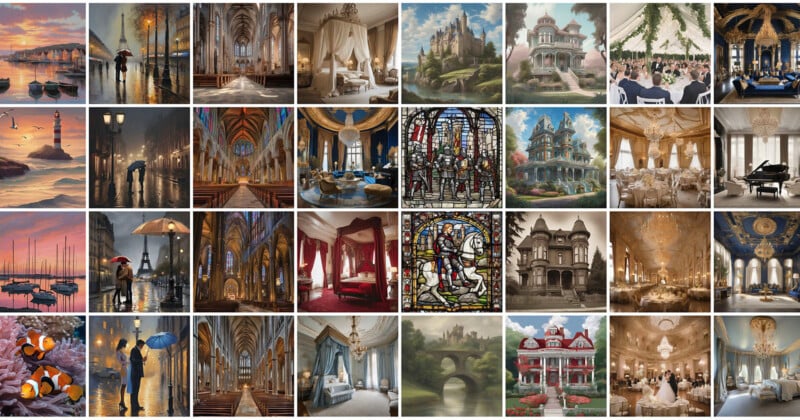
A study has found that when left to their own devices, AI image generators converge on a limited set of photo styles no matter what the original prompt is.
In a paper published in the journal Patterns, a research team tested two AI models: Stable Diffusion XL, an image generator, and LLaVA, an image description model. Gizmodo reports that they used a setup modeled on the game of visual telephone.
Stable Diffusion XL was first given a short, unusual text prompt, such as, “As I sat particularly alone, surrounded by nature, I found an old book with exactly eight pages that told a story in a forgotten language waiting to be read and understood.” It produced an image, which LLaVA then described in words. That description was fed back into Stable Diffusion XL to generate a new image, and the process was repeated for 100 rounds.
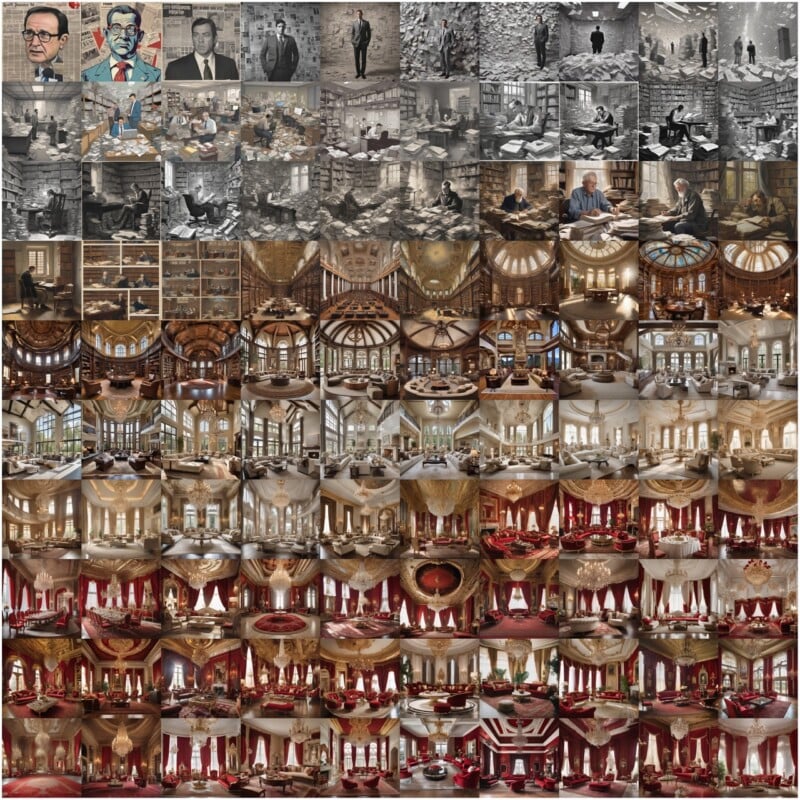
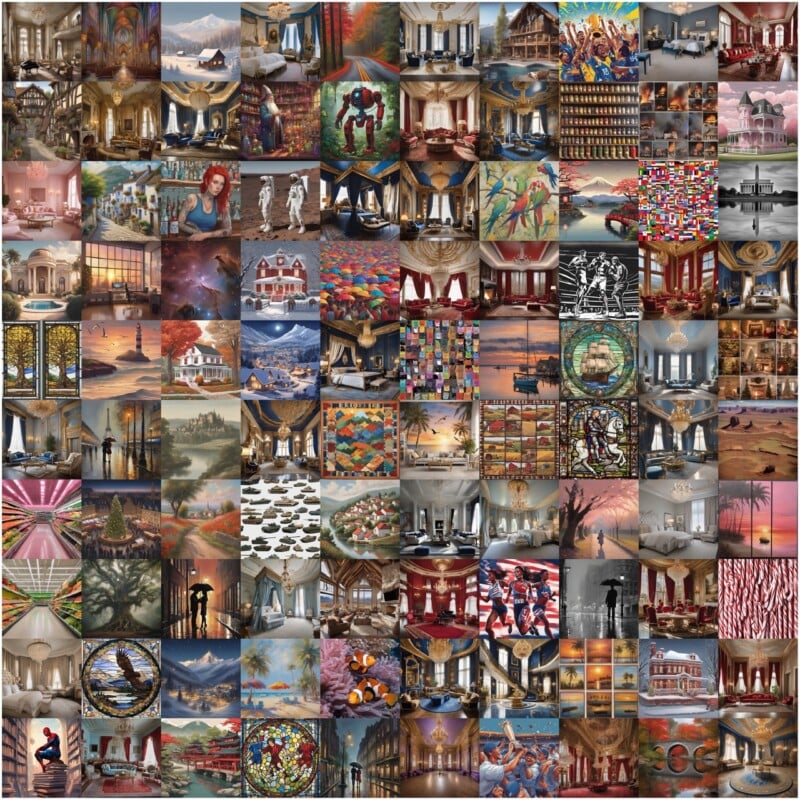
As in the human version of telephone, the original idea quickly degraded. But what stood out to the researchers was not just the loss of detail, but the consistency of the end results. Across roughly 1,000 different runs of the experiment, most image sequences eventually settled into one of just 12 recurring visual motifs. These included scenes such as lighthouses, ornate interior rooms, urban nightscapes, rustic buildings, Gothic cathedrals, pastoral landscapes, and rainy European city scenes.
The transitions were usually gradual, though in a few cases they occurred abruptly. Either way, convergence was the norm. The researchers described the resulting styles as “visual elevator music,” comparing them to generic artwork commonly found in hotels or stock photo frames. Even when the team adjusted parameters like randomness or swapped in different image generators and captioning models, the same overall pattern emerged.
Extending the game to 1,000 iterations did not fundamentally change the outcome. Most trajectories locked into one of the dominant motifs by around the 100th turn and stayed there, although some later iterations produced minor variations. In rare cases, a sequence jumped from one motif to another after several hundred steps, but these shifts were not well understood. As study co-author Arend Hintze, an AI researcher at Dalarna University, puts it: “Does everybody end up in Paris or something? We don’t know.”
Image credits: Hintze Et Al., Patterns