Remarkable Photos Show the People, Places, and Wildlife of the Great Rift Valley in Africa
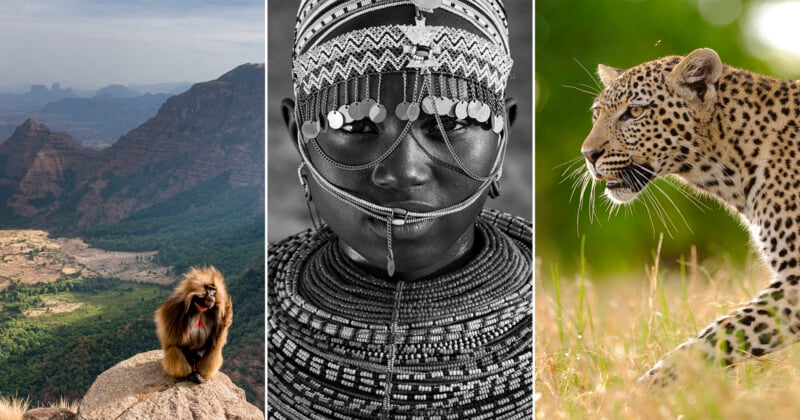
A triptych image: left, a gelada monkey sits on a high cliff overlooking a valley; center, a person in traditional beaded attire and jewelry; right, a leopard crouches in tall grass, alert and focused.

Award-winning South African photographer Shem Compion‘s latest photography book, “The Rift: Scar of Africa,” features nearly 300 photos from Compion’s more than 20 years of exploring and photographing the Great Rift Valley in Africa.

The Great Rift Valley is nearly 4,000 miles (approximately 6,400 kilometers) long and runs from southern Turkey in Asia through the Red Sea to Mozambique in Southeast Africa. This “scar” across the Earth’s surface was created 25 million years ago by volcanic activity and has shaped the countless lives of people and animals alike along its length.
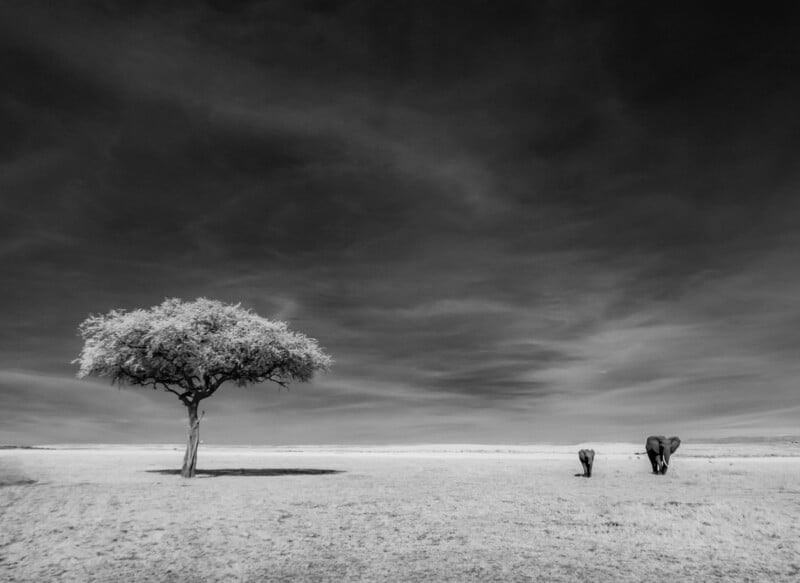
A black and white photo of a lone tree on a vast plain, with two elephants walking together in the distance under a dramatic sky.
Elephant feeding across the plains are mostly seeking out Acacia seedlings and in turn help maintain the open grasslands of the Serengeti/Mara ecosystems. | © Shem Compion
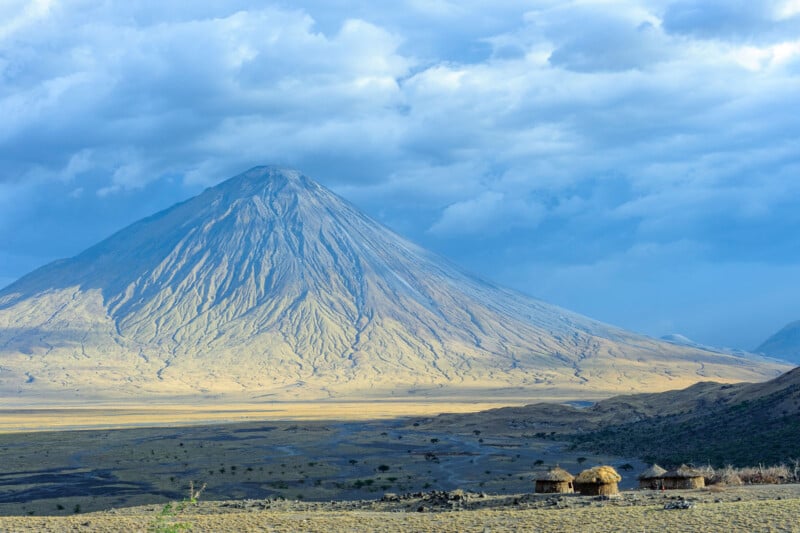
A towering, conical mountain rises above a vast, dry plain under a cloudy sky, with several small thatched huts clustered in the foreground.
Maasai living in the shadow of the active Ol Doinyo Lengai volcano consider it the ‘Mountain of God’ due its frequent changes in shape and color from eruptions. | © Shem Compion
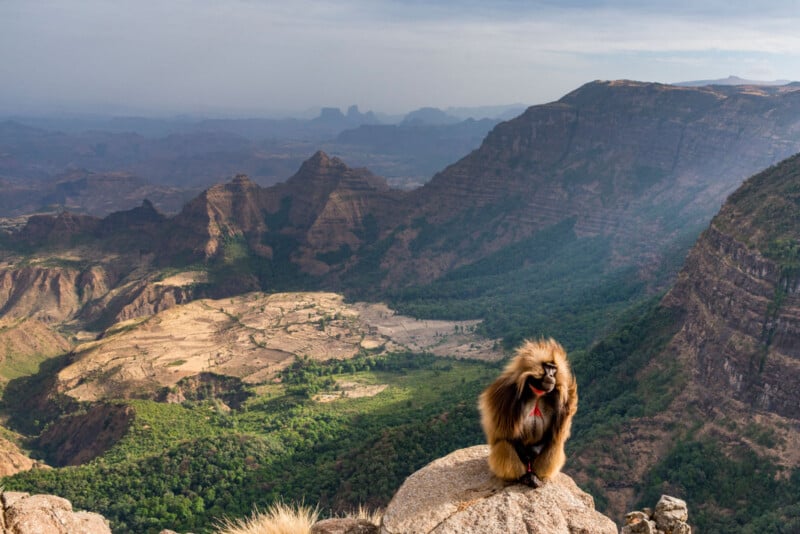
A gelada baboon sits on a rocky ledge overlooking the dramatic green valleys and rugged cliffs of the Simien Mountains in Ethiopia under a partly cloudy sky.
The vertical rise of the Simien Mountains in Ethiopia has led to incredibly high bird and mammal endemism. Gelada monkeys, Ethiopian wolf, and Walia Ibex are all endemic to Ethiopia and found across the Simiens. | © Shem Compion
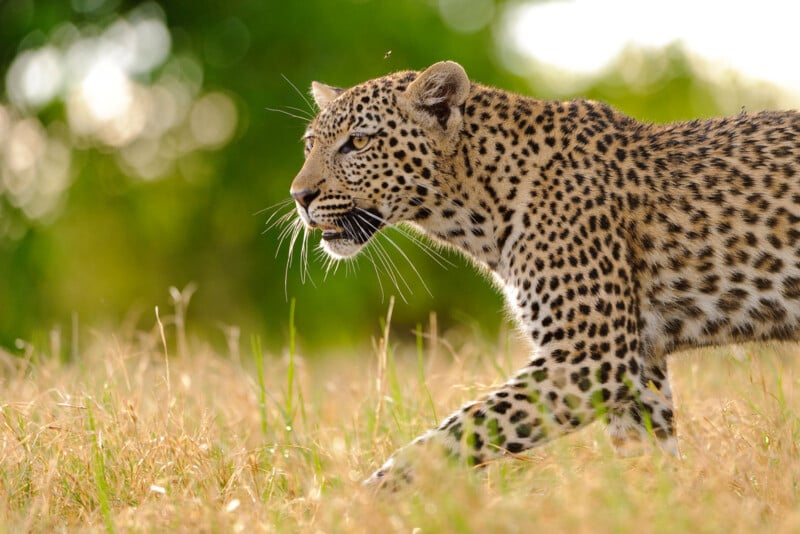
A leopard with a spotted coat walks through tall grass, its head turned slightly to the side and mouth slightly open. The background is blurred green foliage, suggesting a natural outdoor setting.
Leopards are common in the Okavango Delta, Botswana especially in woodlands adjacent to floodplains, and they can be seen often. | © Shem Compion
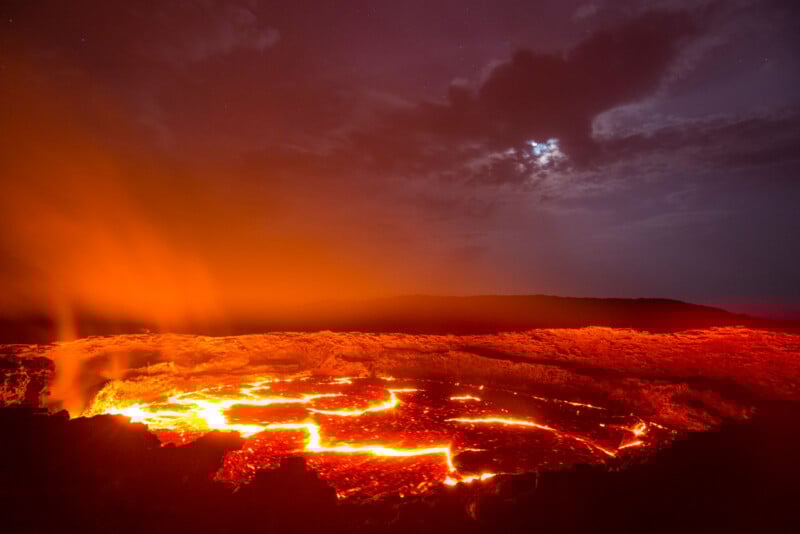
Molten lava glows bright orange and red inside an active volcanic crater at night, with steam rising and clouds partially obscuring the moon in the dark, dramatic sky.
The Erta Ale volcano in northern Ethiopia mid-splitting point between the Arabian, Somalian and African tectonic plates, marking the start of the rift in Africa. | © Shem Compion
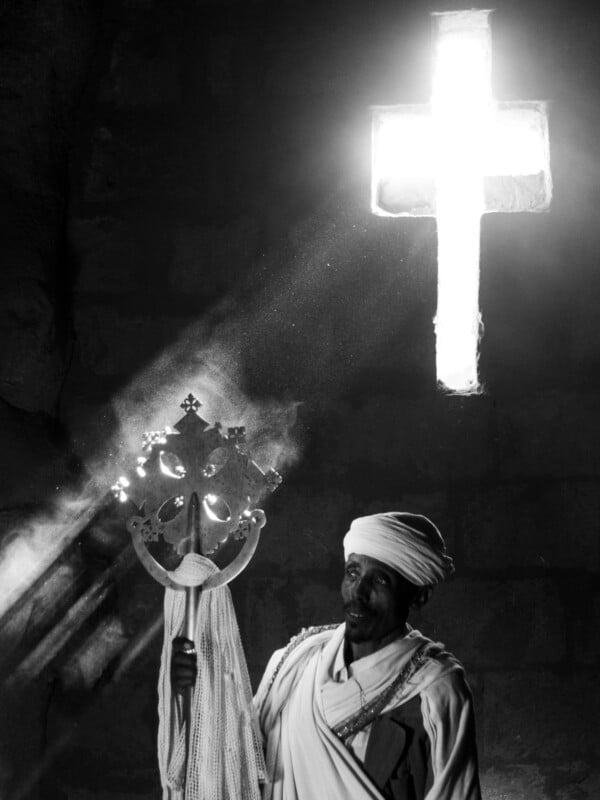
A man in traditional Ethiopian clothing holds an ornate cross, standing in front of a stone wall with sunlight streaming through a glowing cross-shaped window above him. The image is in black and white.
Famed for its monolithic churches hand-carved from solid rock, Lalibela is a holy site for Ethiopian Christians, with the most famous being the cruciform church of St. George (right). Architectural marvels and approximately 800 years old, all 11 churches are kept active by former monks and priests who ensure their longevity. The entire site is culturally significant, and pilgrims travel from across the country to pay homage here. | © Shem Compion
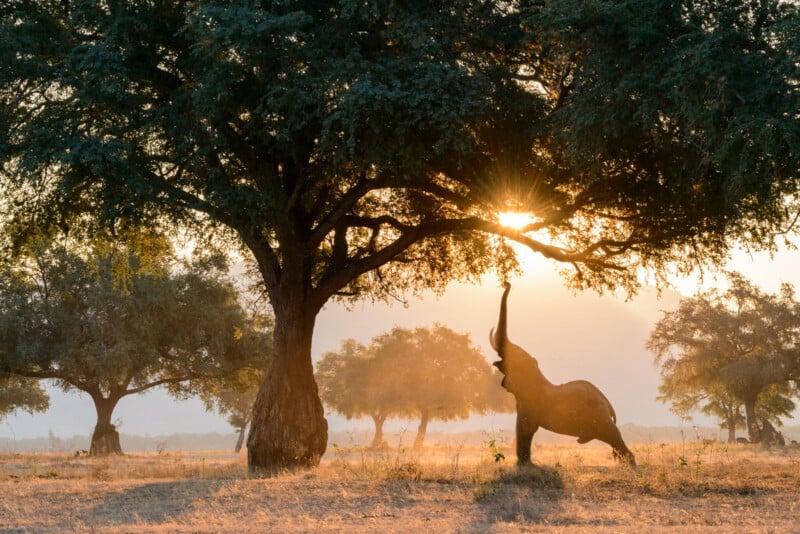
An elephant stands on its hind legs, reaching up with its trunk to eat leaves from a tall tree at sunrise in a sunlit savanna.
Large Winterthorn trees provide forage for elephant along the Zambezi River in Mana Pools, Zimbabwe. | © Shem Compion
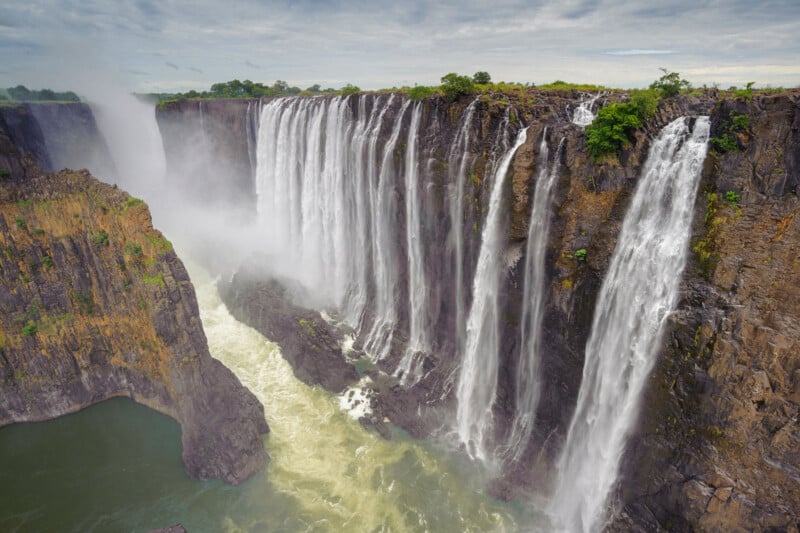
A wide, dramatic waterfall cascades over a rocky cliff surrounded by lush green vegetation under a cloudy sky, creating mist at the base where the water crashes into a river.
Victoria Falls is Africa’s greatest waterfall. A subtle shift in tectonics some five million years ago diverted rivers over the falls and down the Zambezi, creating the magnificent falls. | © Shem Compion

Compion’s book combines decades of stunning photography — more than 280 images in total — and written contributions from Jonathan and Angela Scott, Ngwatilo Mawiyoo, Professor Donald Johanson, His Excellency Hailemariam Desalegn and more. The photos showcase a diverse range of subjects, including landscapes, people, and wildlife, ranging from Ethiopia to Mozambique. In total, over 20 anthropologists, historians, scientists, conservationists, and other experts have contributed to the book’s text.
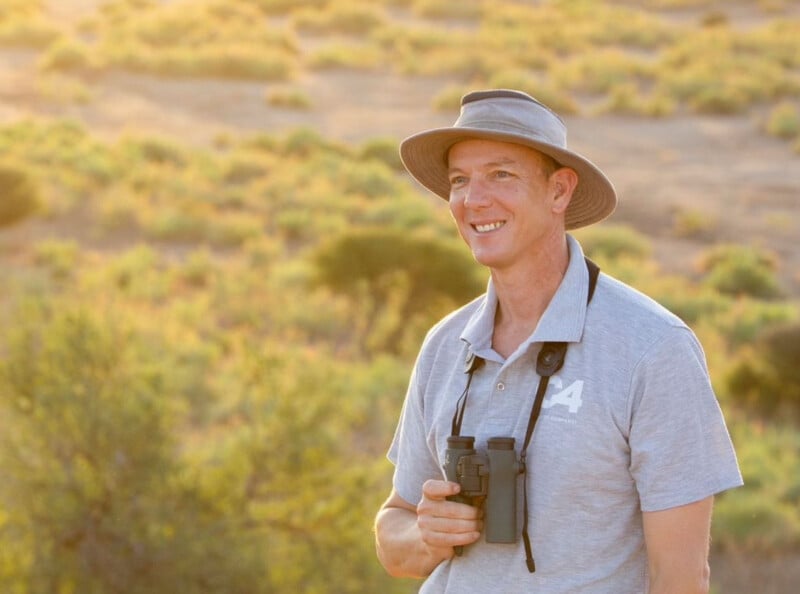
A smiling person in a gray hat and polo shirt stands outdoors, holding binoculars with a sunlit grassy landscape in the background.
Photographer Shem Compion

“25 million years is but a brief moment to change the world. But that’s what the phenomena that sheared Africa apart and created the Rift Valley has done, creating the world’s most diverse mammal abundance, shaping a spectacular landscape and serving as the birthplace of humanity,” says Compion. “I would argue that no other geographical feature has influenced the world as much.”

Compion began exploring Africa’s Great Rift Valley with his camera back in 2002. Over the many years since, the photographer has captured countless color and black-and-white photos in the region. Although the photographer has published many books featuring work in Africa, “The Rift” includes many never-before-seen images.
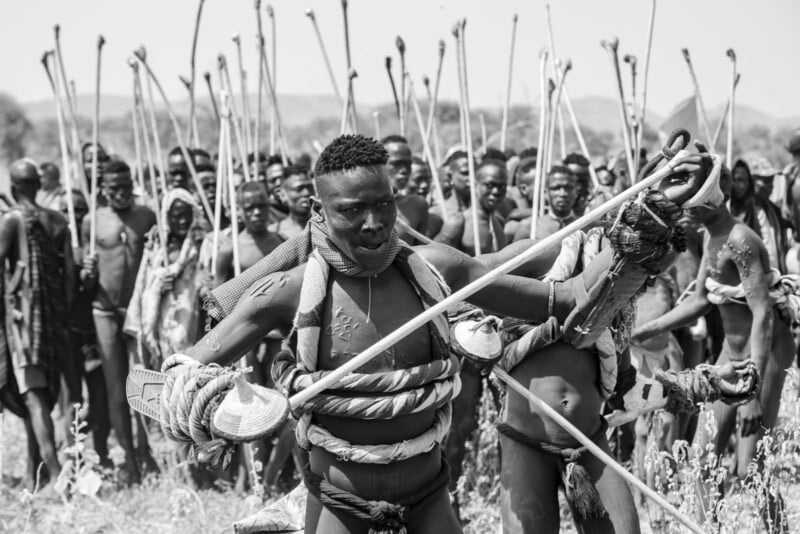
A group of men, some with body paint and decorative ropes, stand outdoors holding long sticks or staffs, with one man in front performing a dynamic gesture. The scene appears ceremonial or traditional.
Mursi men prepare for a stick fight in the Omo Valley of Ethiopia, which in this case gathered 1500 people. | © Shem Compion
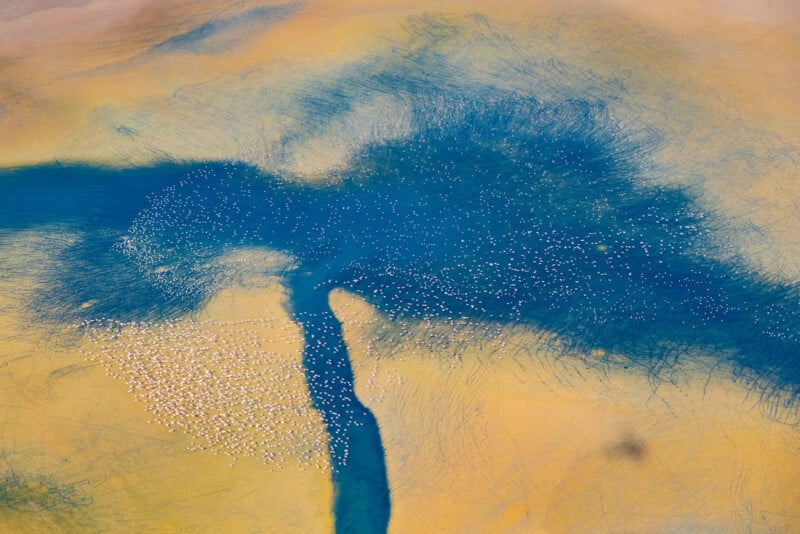
Aerial view of thousands of white flamingos clustered along a winding blue river amidst yellow and tan sandy terrain, creating an abstract, tree-like pattern.
Flamingos take flight over Lake Logipi in Kenya. | © Shem Compion
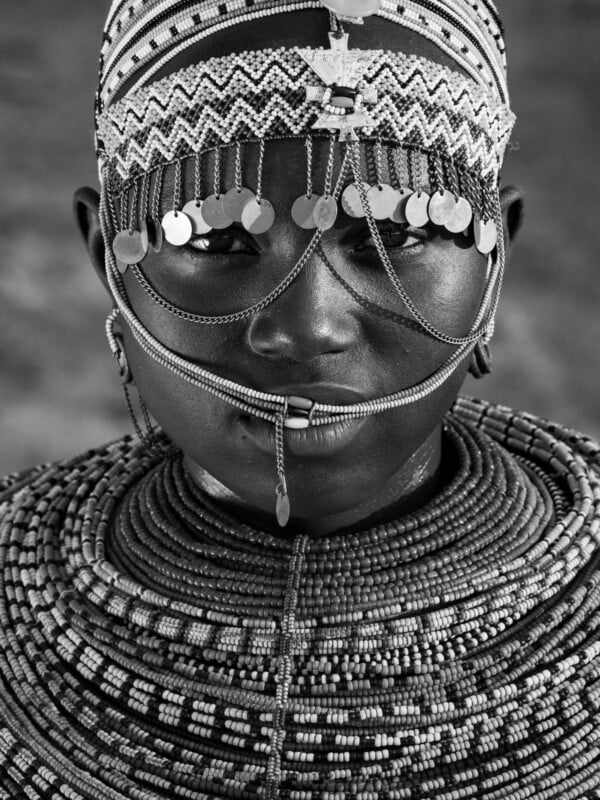
Black and white portrait of a person wearing elaborate beaded jewelry and a detailed headdress with chains and metal ornaments covering their face, looking directly at the camera.
Samburu detail. Beadwork is used across the valley for various purposes. It is more than function. The design is art. | © Shem Compion
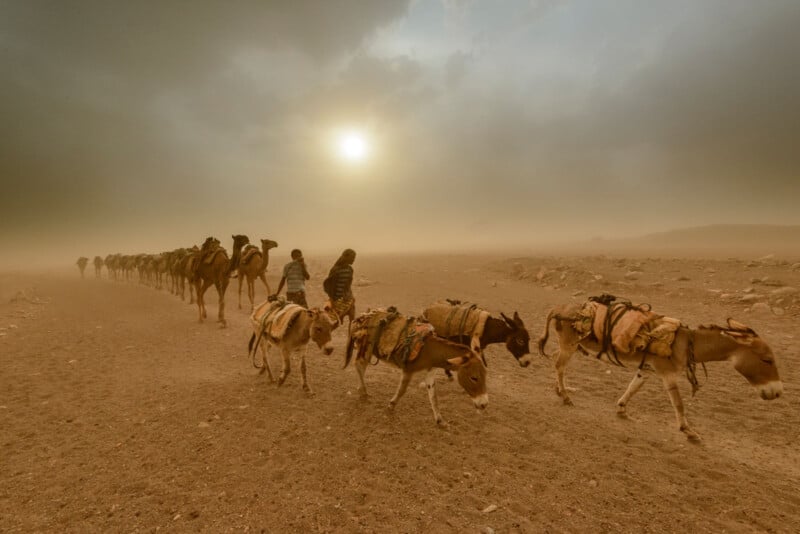
A caravan of donkeys carrying packs walks through a dusty, barren landscape at sunset. Several people accompany the animals as the sun shines dimly through a hazy, cloud-filled sky.
A salt caravan treks along an eight-day ancient trading route to collect salt carved from a dry sea bed. The Afar region of Ethiopia is considered one of the harshest places to live on planet Earth. | © Shem Compion
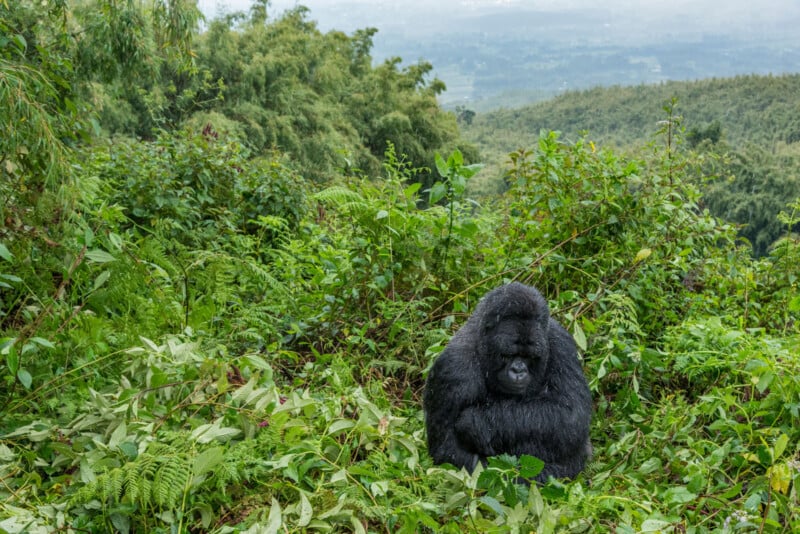
A large gorilla sits among dense green foliage in a mountainous, forested landscape, with misty hills visible in the background.
On the eastern arc of the Rift, mountain gorillas are confined to the Virunga volcano complex that extends over the borders of DRC, Uganda and Rwanda. | © Shem Compion
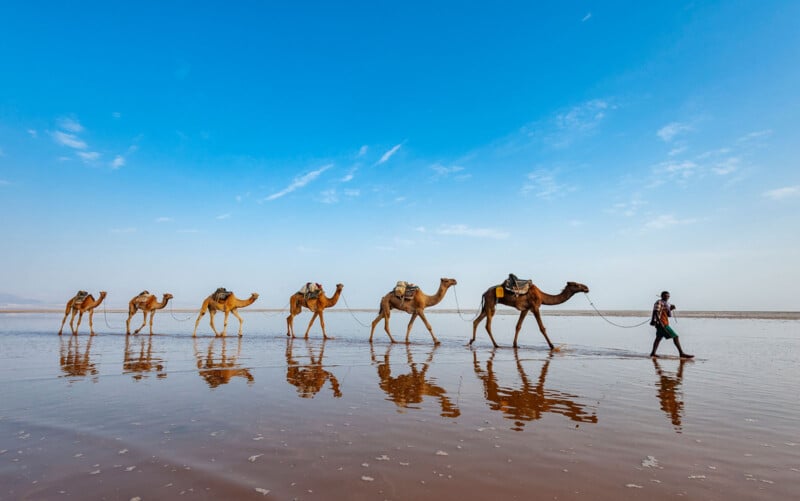
A person leads a caravan of six camels across a reflective, shallow water surface under a clear blue sky, with the camels and person casting visible reflections.
A camel caravan marches through the Afar region in Ethiopia. They are following an ancient salt trade route, walking four days each way to collect and sell salt slabs. | © Shem Compion
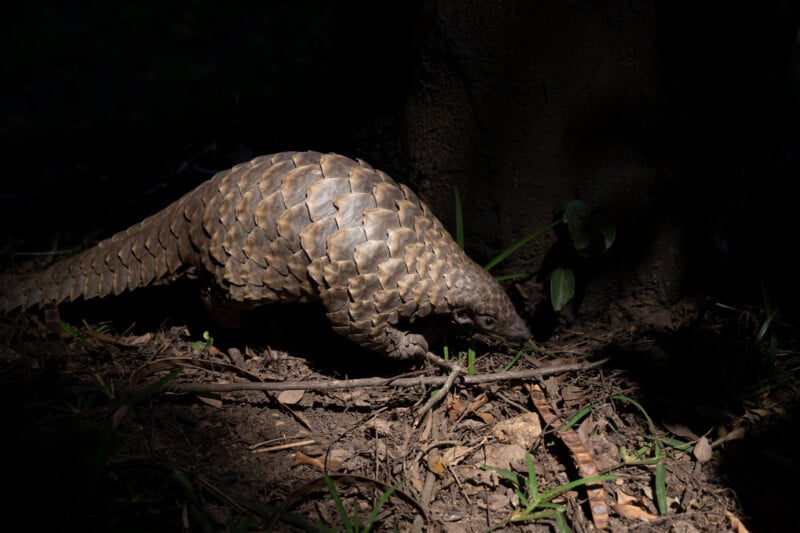
A pangolin with overlapping scales walks on the ground in a shaded forest area, partially illuminated by sunlight near the base of a tree.
Pangolins are highly sought after by poachers across Africa. Gorongosa’s Pangolin Project receives poached pangolins from the reserve and surrounding areas brought in by rangers. These animals are often malnourished and dehydrated. The project nurtures them back to health, monitors them, and eventually releases them back into the wild. The success of the project relies on strong community engagement, who in turn have reported many poachers. Over 100 pangolins have been released into the wild since 2018. | © Shem Compion
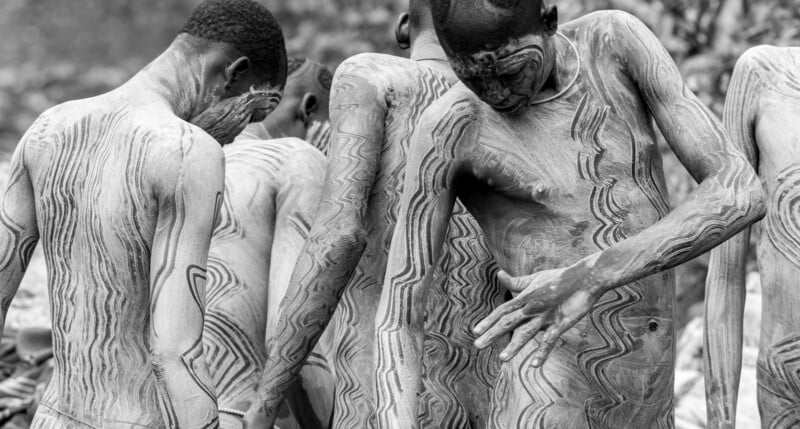
Black and white photo of several people with intricate body paint designs covering their skin, standing closely together with their backs and sides visible.
Body-painting is a way of expressing identity, as much as it is an ethnography of the Suri culture and traditions. Great care is taken when applying the clay to ensure correct identity is maintained. | © Shem Compion
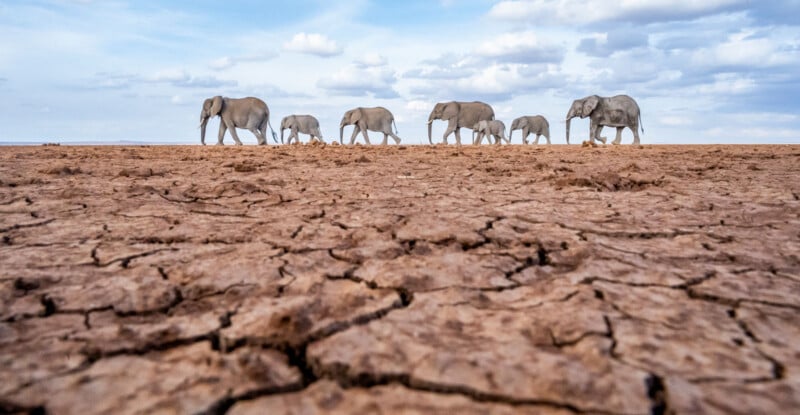
A herd of elephants walks in a line across a dry, cracked, barren landscape under a cloudy blue sky, emphasizing the harsh conditions of their environment.
Elephants march across the dry Lake Amboseli in Kenya. The water they seek is glacier meltwater from Kilimanjaro, which springs up on the lower slopes of the mountain. Kilimanjaro is the largest mountain in Africa. | © Shem Compion
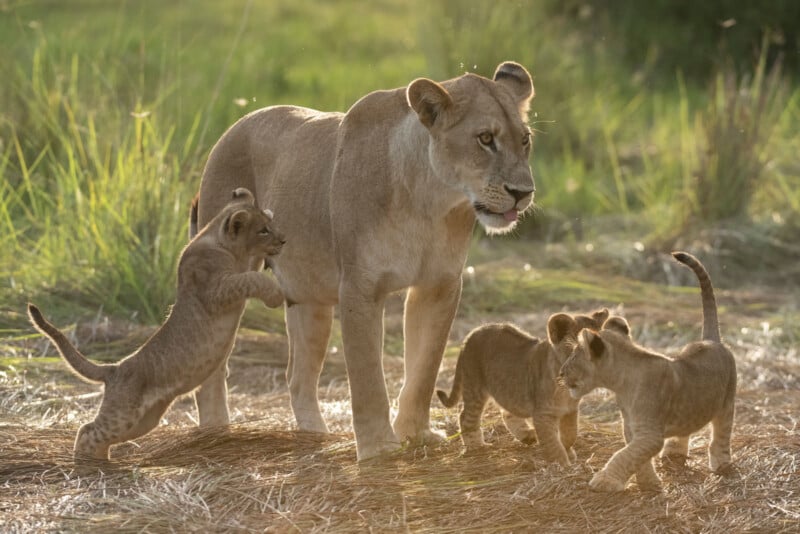
A lioness stands on sunlit grass as three playful lion cubs surround her, with one cub reaching up toward her side and the others interacting nearby.
Being a large wilderness, lion numbers in the Okavango Delta are healthy. This means there’s fierce competition for leadership roles. Strong competition results in strong genetic hereditary, strengthening the gene pool, an indirect benefit of large wilderness areas. | © Shem Compion
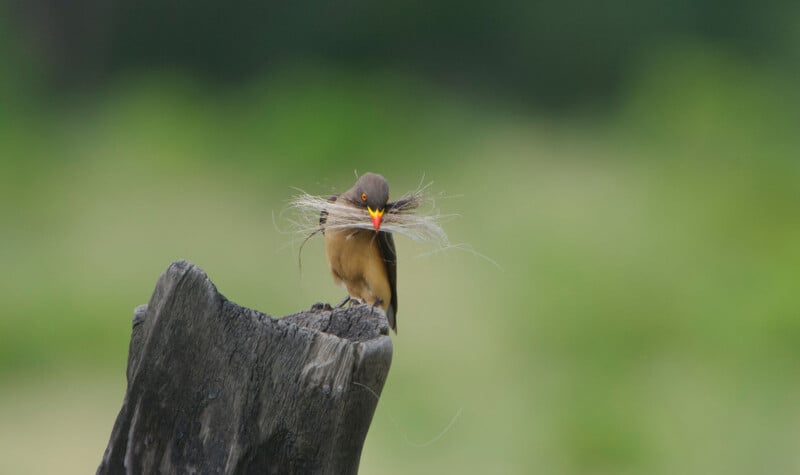
A small bird perches on a weathered tree stump, holding strands of dried grass or fibers in its beak, with a blurred green background.
An oxpecker uses hair gleaned from a buffalo to line its nest in a burnt tree stump in the Maasai Mara, Kenya. Ecosystem symbiosis is everywhere in nature. | © Shem Compion

“With stunning photos and compelling text, this important book not only captures the complexities of the Rift Valley’s ecosystems, but it also emphasizes the urgent need for conservation efforts that combine science and compassion,” Dr. Jane Goodall DBE said before her recent passing.

“The Rift Valley — cracked, ancient, awe-inspiring — is both metaphor and map. A reminder that what seems like rupture can also be the beginning of something new. This book is a gift. Not only to those who will hold it in their hands, but to all of us who are looking for something solid to hold on to. Let it remind us: the ground beneath us is sacred. And the future is still ours to shape,” adds Sabrina Dhwore Elba, UN Goodwill Ambassador for the International Fund for Agricultural Development (IFAD). Elba has also contributed expertise to the book.
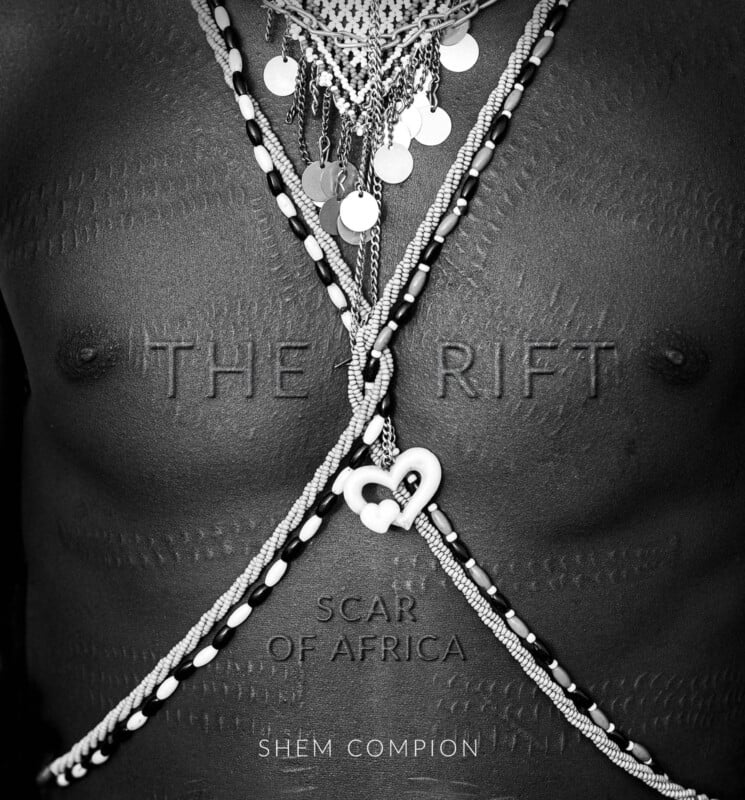
Black-and-white photo of a person's chest adorned with beaded necklaces and jewelry; intricate raised scarification marks are visible, with the words "THE RIFT SCAR OF AFRICA" and "SHEM COMPION" overlaid on the image.
‘The Rift: Scar of Africa’ by Shem Compion is available now for $95 (£75 / €83 / ZAR 1,897.50)

Shem Compion’s latest book, “The Rift: Scar of Africa,” is available now for $95.


Image credits: Photos by Shem Compion https://www.shemimages.com/
Discussion