Full-Frame Canon EOS C50 Is Canon’s Smallest and Lightest Cinema Camera
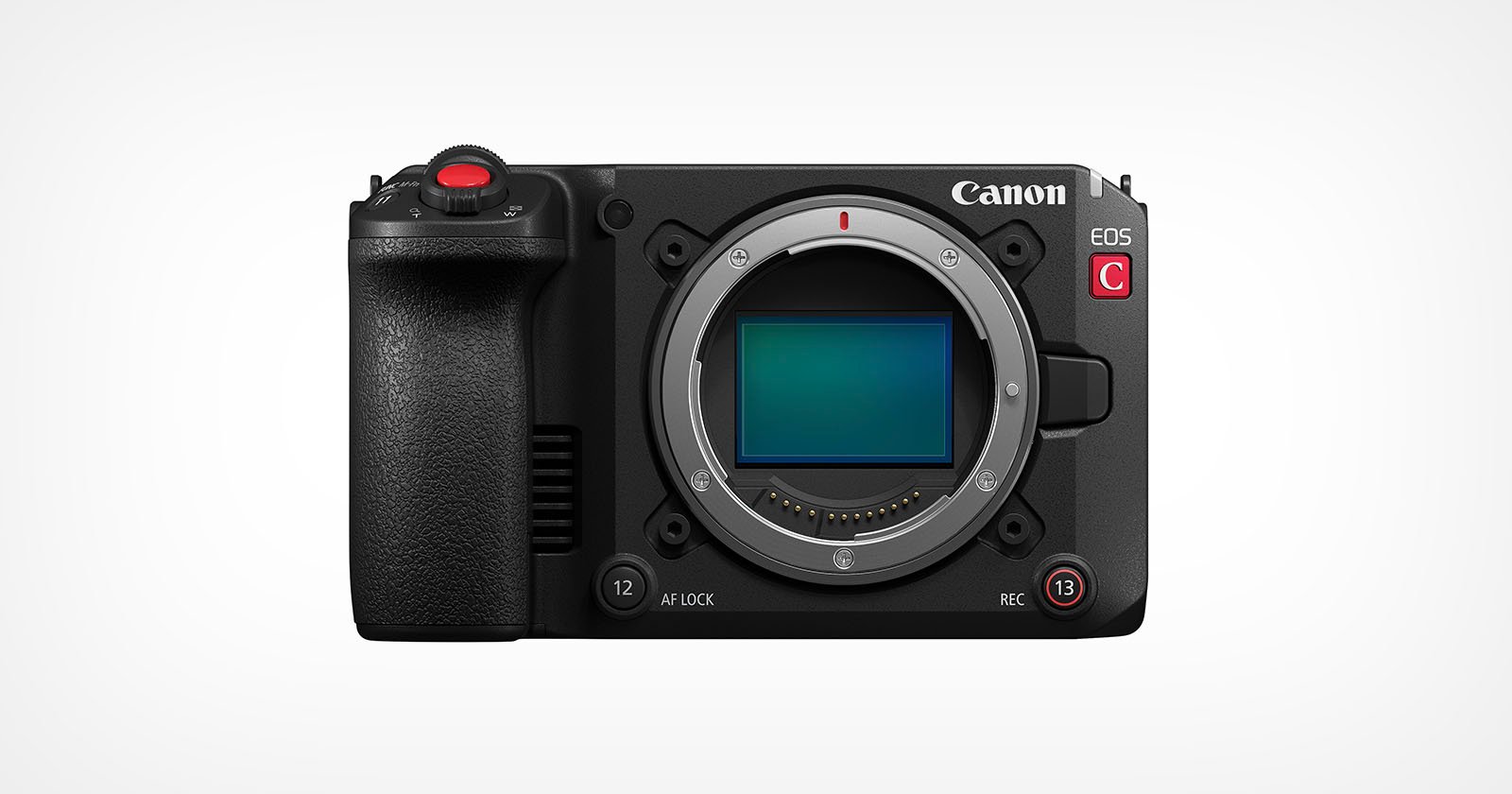
The Canon EOS C50 is a new compact full-frame cinema camera that channels the R5 C’s hybrid spirit. The C50 features a brand-new 7K full-frame CMOS image sensor, RF mount, flexible design, and Canon’s acclaimed Dual Pixel CMOS AF II technology.
The Canon EOS C50 Has a Video-First Design
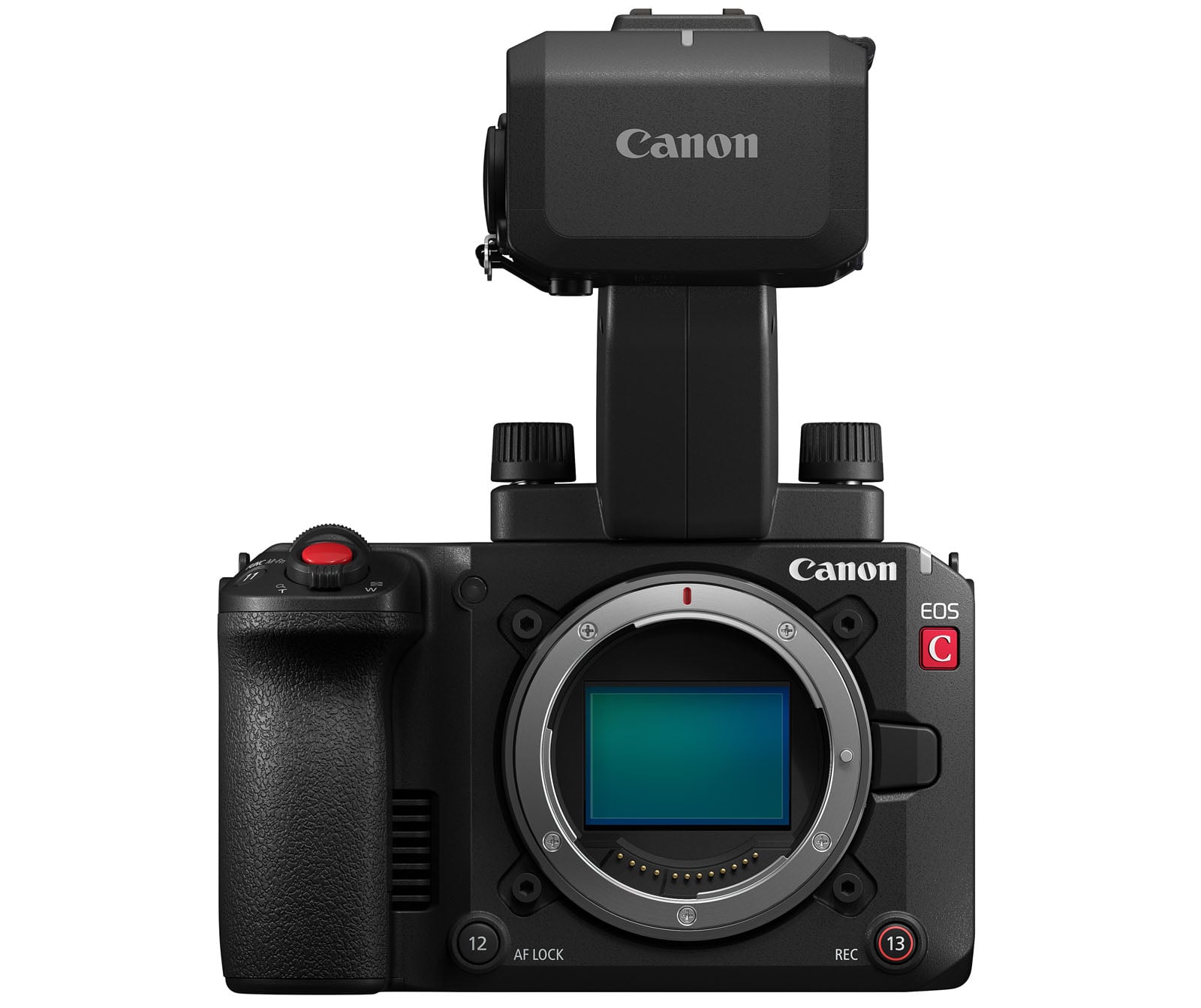
The EOS C50 has a streamlined design purpose-built for videographers. The camera ditches the electronic viewfinder, much like Canon’s recent R50 V, while maintaining the controls and I/O that Canon’s high-end EOS Cinema cameras are known for.
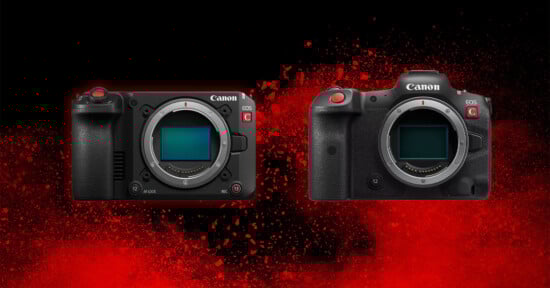
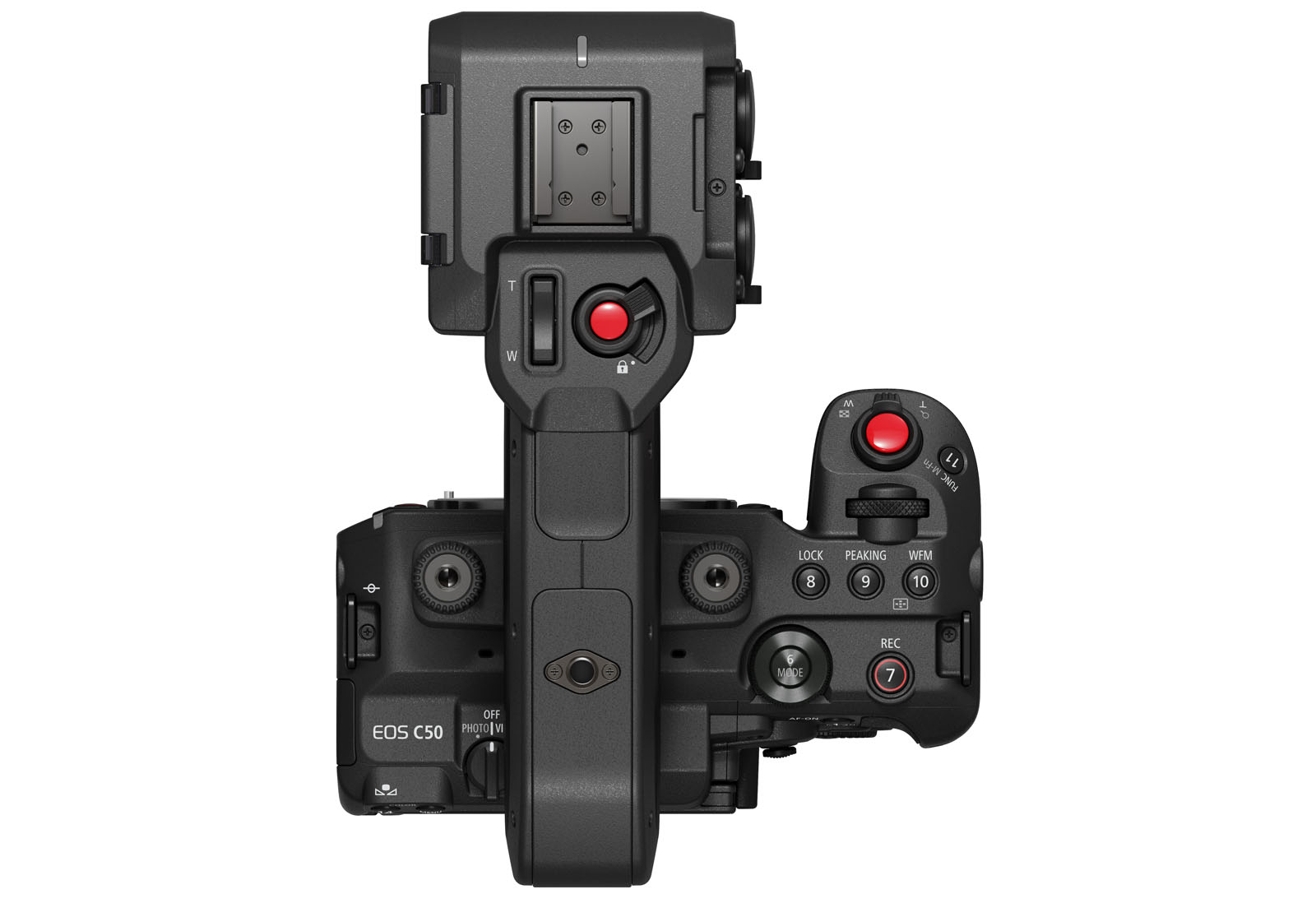
The EOS C50 weighs 665 grams (1.47 pounds) and is significantly smaller than the Canon EOS R5 C, at least when the C50’s included top handle is not attached. Speaking of the handle, it has two full-size XLR terminals, audio controls, a zoom rocker, tally light, and record button.

The C50 is 143 by 88 by 95 millimeters (5.6 by 3.5 by 3.7 inches) without the attached handle unit and Microphone holder. These add-ons increase overall size considerably, although they only add 445 grams (0.98 pounds) to the kit weight.
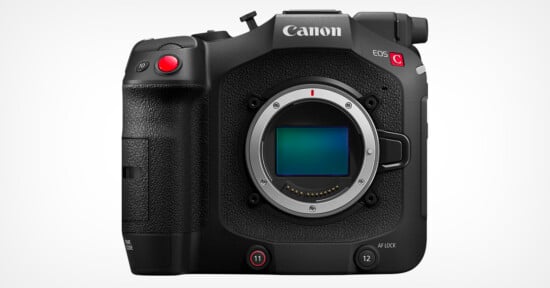
The C50’s body itself has a front tally lamp, as was clearly seen in Canon’s teaser last week, a self-timer lamp and AF-assist beam, a zoom lever, front and rear air intakes for its active cooling system, mount adapter lock plate screw holes for working with heavier adapted lenses, and 14 user-customizable function buttons alongside typical photo and video controls.

Concerning the zoom lever on the camera itself and the included top handle, this works alongside Canon’s power zoom lenses, including the RF 24-105mm f/2.8 L Z and RF 70-200mm f/2.8 L IS USM Z. These two lenses work alongside an optional power zoom adapter, and when paired with the C50, the power zoom can be controlled via the rocker on the camera or handle.
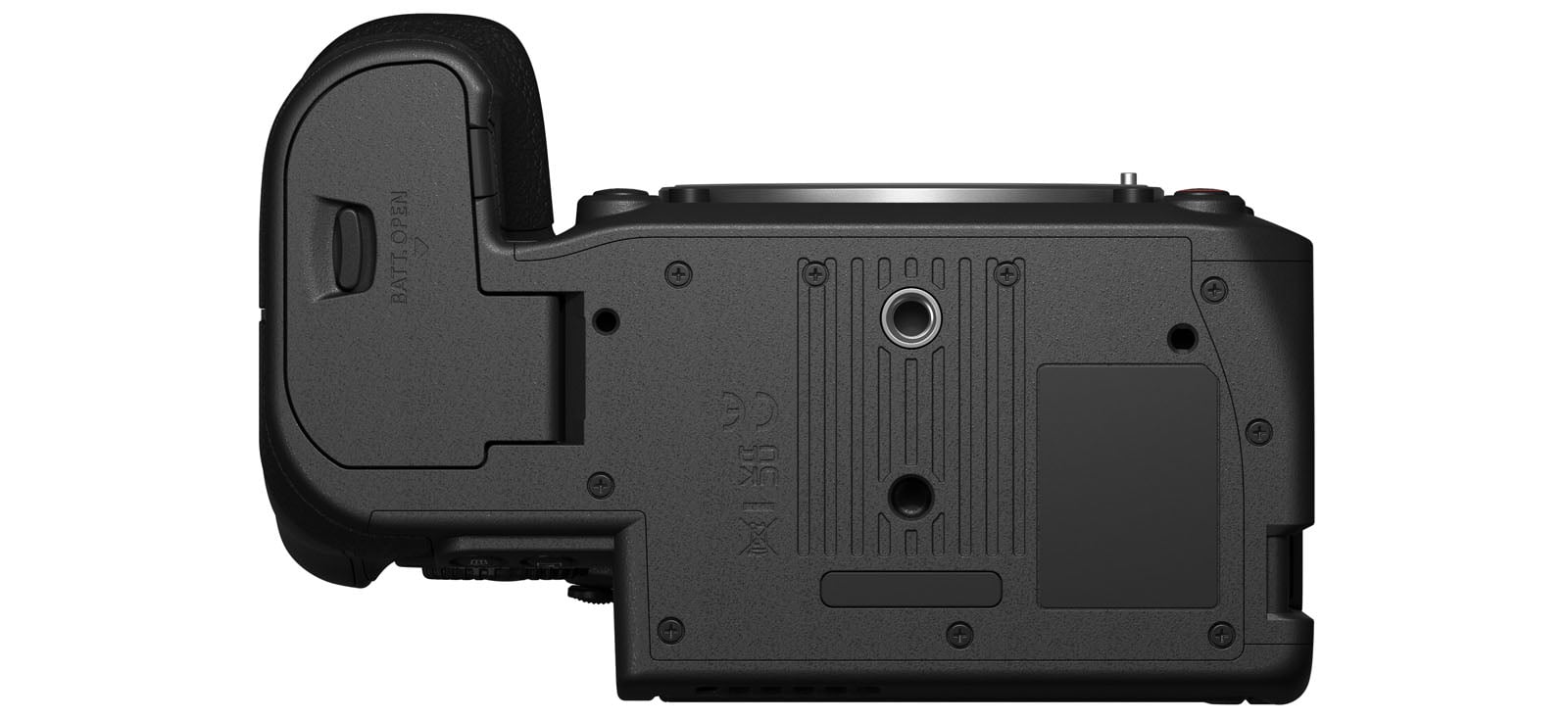
Given its professional video chops, the C50 has an array of video-centric design features. In addition to many 1/4-20 screw holes littered across the camera, the C50 has a Time Code terminal, full-size HDMI port, dedicated microphone and headphone ports, and dual card slots, including one CFexpress 2.0 Type B slot and a UHS-II SD slot. Thanks to the dual card slots, the C50 can simultaneously record landscape and portrait orientation video files: landscape to the CFexpress slot and vertical video to the SD card. It’s the first Canon camera to offer this simultaneous recording feature.
In lieu of an electronic viewfinder, the C50 features a 3-inch fully articulating touchscreen that can swivel out to the camera’s side. Not many video-focused cameras in recent years have included an electronic viewfinder, so the C50’s lack of one is par for the course.

A Brand-New 7K Full-Frame Image Sensor for Video and Photo
At the heart of the Canon EOS C50 cinema camera is a brand-new 32-megapixel 7K full-frame CMOS image sensor. This new sensor has Dual Base ISO at 800 and 6400 in Canon Log 2. Canon promises up to 16 stops of dynamic range, up from 14 on the Canon EOS R5 C’s higher-resolution 8K-capable sensor. Further, the R5 C did not support C-Log2 at all, for what it’s worth. Paired with the Canon DIGIC DV7 processor, the C50 can record 12-bit Cinema RAW Light at up to 7Kp60.
The C50 is also the first camera in the Canon EOS lineup to include full-frame 3:2 open gate recording, which opens up new cropping possibilities for filmmakers and enables the use of 1.5x full-frame anamorphic lenses.
Although the C50 is designed primarily for video and is decidedly a video-first model, it has some photo chops. The C50 captures 32-megapixel photos at up to 40 frames per second, including full autofocus and RAW recording. The ISO ranges from 100 to 64,000 natively, but can expand to 512,000. It also includes Canon’s pre-continuous shooting mode and, of course, Dual Pixel CMOS AF II with AI-powered subject detection.
The C50 lacks a mechanical shutter altogether, which is not an issue at all for video recording, but does come with one notable limitation for photographers: no flash sync.
This same autofocus system and subject detection for photography carry over to all the camera’s video recording modes as well. Speaking of which, the C50 records Cinema RAW Light, XF-AVC, XF-AVC S, and XF-HEVC S codecs.
The camera can capture 12-bit RAW full-frame open gate video in RAW ST and RAW LT modes, but not RAW HQ, at up to 7Kp30. Full-frame 7K 16:9 recording is available at 7Kp30 resolution in RAW HQ and 7Kp60 for RAW ST and LT. With a Super35 crop, RAW HQ is still limited to 30p frame rates, albeit at a reduced 5K resolution. 5Kp60 is available in the two lower-quality Cinema RAW Light recording modes. Finally, a Super16 crop captures 2.5K video at 60p in all Cinema RAW Light modes.
4:2:2 10-bit video recording is available at speeds up to 120p in Slow & Fast mode in 4K resolution and lower.
As expected, 7K Cinema RAW Light recording requires using the CFexpress Type B card slot.

The Canon EOS C50 Promises Versatility in a Hybrid Workflow
It is worth noting that the Canon EOS C50 does not support user LUTs in-camera, but it otherwise has many compelling features for video-first and hybrid users. The camera’s simultaneous crop recording and CV Protocol for virtual productions will make it appeal to a broader range of users.
The C50 also features Built-in Wi-Fi and Ethernet (via a USB-C adapter) and includes Frame.io Camera to Cloud (C2C). Users can send proxy video files directly to a project in the cloud while they are shooting, even on location.
The camera also includes UVC/UAC support, meaning it can be used as a webcam over USB-C without any special software.
The Canon EOS C50 uses the LP-E6P battery that Canon released alongside the EOS R5 II last year. This more powerful battery promises up to 90 minutes of continuous shooting, which Canon says is about double what the prior-generation LP-E6NH battery can achieve. Further, the new battery is required for complete functionality, and many EF lenses will not work on the C50 when using an older battery, even though it can fit into the camera. The C50 can also be powered via DC and USB.
Pricing and Availability
The Canon EOS C50 will launch in November for $3,899.
Image credits: Canon