Can the Canon EOS C50 End the Sony FX3’s Reign of Hybrid Dominance?

Canon unveiled the EOS C50 this morning, a 7K full-frame video-first hybrid camera priced at $3,899. Its most obvious competitor, aside from Canon’s own R5 C, is the Sony FX3. Does Canon’s new C50 give Sony something to worry about?
Launched in 2021, Sony’s $4,098 FX3 has found a home on many professional film sets thanks to its compact form factor and high-end image quality. Canon’s new C50 camera, which costs $200 less and comes with an XLR-equipped handle, which is particularly aggressive.
Canon EOS C50 Versus Sony FX3: The Big Picture Features and Specs
Both the Canon EOS C50 and the Sony FX3 (technically, it’s the FX3A now, thanks to a minor display upgrade and charger swap) cater to the same video-first hybrid user at roughly the same price points. The C50 is slightly more affordable and comes with a top handle in the box, while the FX3’s XLR Handle Unit is an optional $600 add-on. Nonetheless, this price difference is relatively minor in the grand scheme of things. The Sony FX2 ($2,700) is also a potential point of comparison, although not the primary focus of this story. More on that later.

At a very high level, each of the C50 and FX3 has some interesting advantages over the other.
The Canon EOS C50 features a brand-new 32-megapixel full-frame CMOS image sensor that can capture 7K video. The Sony FX3, on the other hand, has a much lower-resolution 10.2-megapixel backside-illuminated sensor that can capture 4K video.

Thanks to its new image sensor, which includes Dual Base ISO at 800 and 6400 in C-Log 2, the C50 promises better dynamic range than the FX3 as well. Canon claims 16 stops of dynamic range, which Sony only promises 15+ stops in S-Log3. That’s a minor difference which may not be noticeable in real-world performance.
The FX3, given its relatively larger pixels, may also have a low-light image quality advantage over the C50 for both video and photography, although determining how much of an advantage there is will require further testing.
However, what will be noticeable is that the C50 can capture internal 12-bit RAW video, for which the FX3 requires external recording (RAW 16-bit output over HDMI). The FX3’s internal recording tops out at H.265 4:2:2 10-bit 4K at up to 120p (granted, 120p comes with a slight crop). The C50’s RAW 12-bit internal recording maxes out at 6940 x 4640 at up to 30p. That’s 3:2 open gate full-frame recording, by the way. The FX3 does not natively record open-gate video.

The C50’s higher megapixel count impacts photo performance as well. The C50 captures 32-megapixel RAW photos at up to 40 frames per second and features Pre-Release Continuous capture. The FX3 shoots 10.2-megapixel RAW images at up to just 10 frames per second, and it lacks pre-release capture.
The Sony FX3 has two potentially important features that Canon’s new C50 lacks: in-body image stabilization and a mechanical shutter. While a mechanical shutter doesn’t matter for video, the C50’s lack of one means that it is a slightly less capable photographic tool in specific situations, including ones where someone may want to use flash. The C50 has no flash sync. Beyond its five-axis IBIS system, which was a first for Sony’s Cinema Line in 2021, the FX3 features flash sync at up to 1/250s.
Concerning the shutter, the C50’s electronic shutter is faster than the FX3’s shutter system, topping out at 1/16000s rather than 1/8000s. It’s not necessarily a big difference, but it may matter in very limited situations.

Both cameras feature AI-assisted autofocus systems with various subject detection modes, wide area coverage, and a ton of autofocus points. Canon’s Dual Pixel CMOS AF II system is excellent, and Sony’s autofocus system is always reliable. We will need to go hands-on with the C50 to see how its autofocus holds up, but a safe bet is that the C50’s AF will be a bit better overall, given that it is a much newer system than the one in the four-year-old FX3. That’s just speculation, of course.
Canon EOS C50 Versus Sony FX3: Design and Usability
The Canon EOS C50 looks a lot like the Sony FX3 in terms of its overall shape and design language. Canon has moved away from the R5 C’s SLR-style design and toward something more video-centric and streamlined. This means ditching an EVF, so the C50 and FX3 have that in common. They also both feature dual card slots (CFexpress Type B and SD for the C50 and CFexpress Type A and SD for the FX3) and active cooling, although the C50’s active cooling system is a little chunkier.

The EOS C50 is Canon’s smallest and lightest Cinema EOS camera to date. Without its included top handle attached, which adds two full-size XLR ports, by the way, the C50 is 143 by 88 by 95 millimeters (5.6 by 3.5 by 3.7 inches) and weighs 665 grams (23.5 ounces). The Sony FX3 is approximately 130 by 85 by 78 millimeters (5.1 by 3.3 by 3.1 inches) and weighs 640 grams (22.6 ounces) body only. So the C50 is a bit wider, thicker, and taller than the FX3 but only negligibly heavier. It may be Canon’s smallest and lightest Cinema camera yet, but the FX3 still has it beat.
Both cameras feature 3-inch touchscreens. The FX3A’s upgraded LCD has 2.36 million dots, up from the original FX3’s 1.44 million dots. The Canon EOS C50’s 3-inch panel has approximately 1.62 million dots. Neither company publishes a max brightness spec for its camera’s LCD, unfortunately.

Each camera offers extensive control customization, although the C50 has 14 numbered buttons that can be reassigned, while the FX3 has just six. Additional FX3 controls can be tweaked, but the C50 has it beat there.
Both cameras include numerous 1/4-20 screw holes on each side of the camera, promising considerable flexibility within various professional video workflows and setups. They both support XLR audio via their respective attachable handles, and they both support Time Code, although the FX3 requires an extra adapter cable for external time code sync. The FX3 has a built-in stereo mic, while the C50 doesn’t. Arguably, most users won’t take advantage of a built-in mic on a camera like this, but that difference is worth noting.
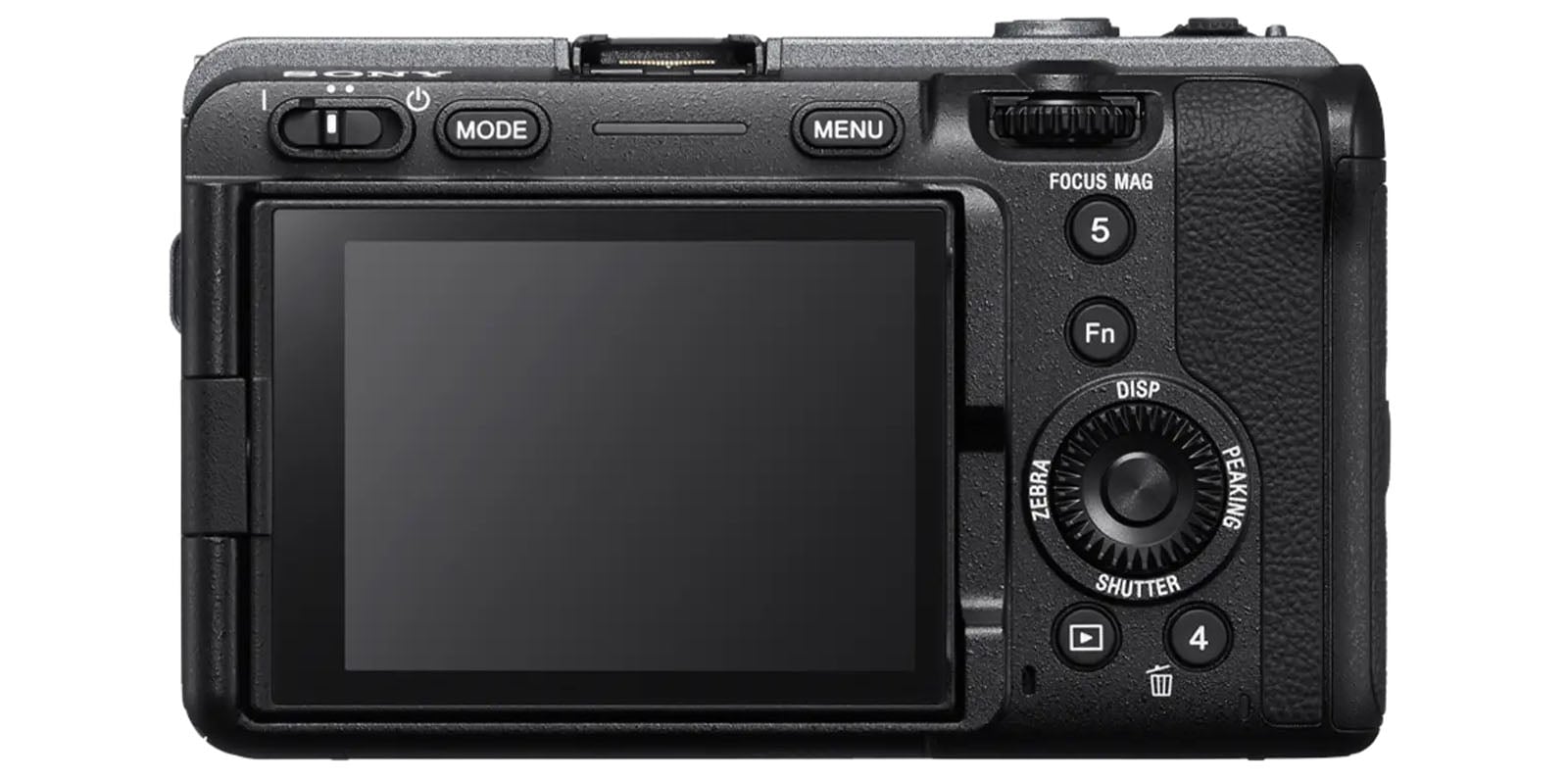
Neither camera necessarily has an obviously superior design, although the C50 does have a few more usability features out of the box. Each camera occupies roughly the same lane in terms of camera design and usability, and it’s easy to imagine different filmmakers preferring one over the other.
What About the Sony FX2?
Before wrapping up, it’s worth taking a brief glance at the Sony FX2. While the C50 is $1,200 more than the FX2, some users may consider the FX2 and C50 side-by-side.
The Sony FX2 has a 33-megapixel full-frame image sensor, like the one in the Sony a7 IV, and captures 4Kp60 video. Like the FX2, it lacks internal RAW recording, but can capture 16-bit RAW video externally via HDMI.
The Sony FX2 leans more into being a true hybrid camera, thanks to its tilting OLED EVF. For some users, this EVF is essential. Like the FX3, the FX2 also features a five-axis in-body image stabilization system and active cooling.
The FX2 works with Sony’s optional XLR-H1 Handle Unit and can fit within a professional video workflow, although it is not quite targeting the same user as either the C50 or FX3.
Both the Sony FX2 and Canon EOS C50 offer more compelling photographic features than the more expensive Sony FX3, although in terms of professional-quality video recording, the C50 and FX3 have the FX2 beat.

Canon EOS C50 Versus Sony FX3: Which One Is Better?
At the risk of a cop out, it’s too early to say which camera is better. PetaPixel has not yet gone hands-on with the Canon EOS C50, but we plan to do a comprehensive review of the camera as soon as possible.
Nonetheless, the new C50 clearly has some key advantages on paper. It records much higher resolution video, captures internal RAW 12-bit video, offers open gate full-frame, and shoots higher-megapixel photos at faster frame rates than the Sony FX3. These differences can be significant in many video and hybrid workflows.
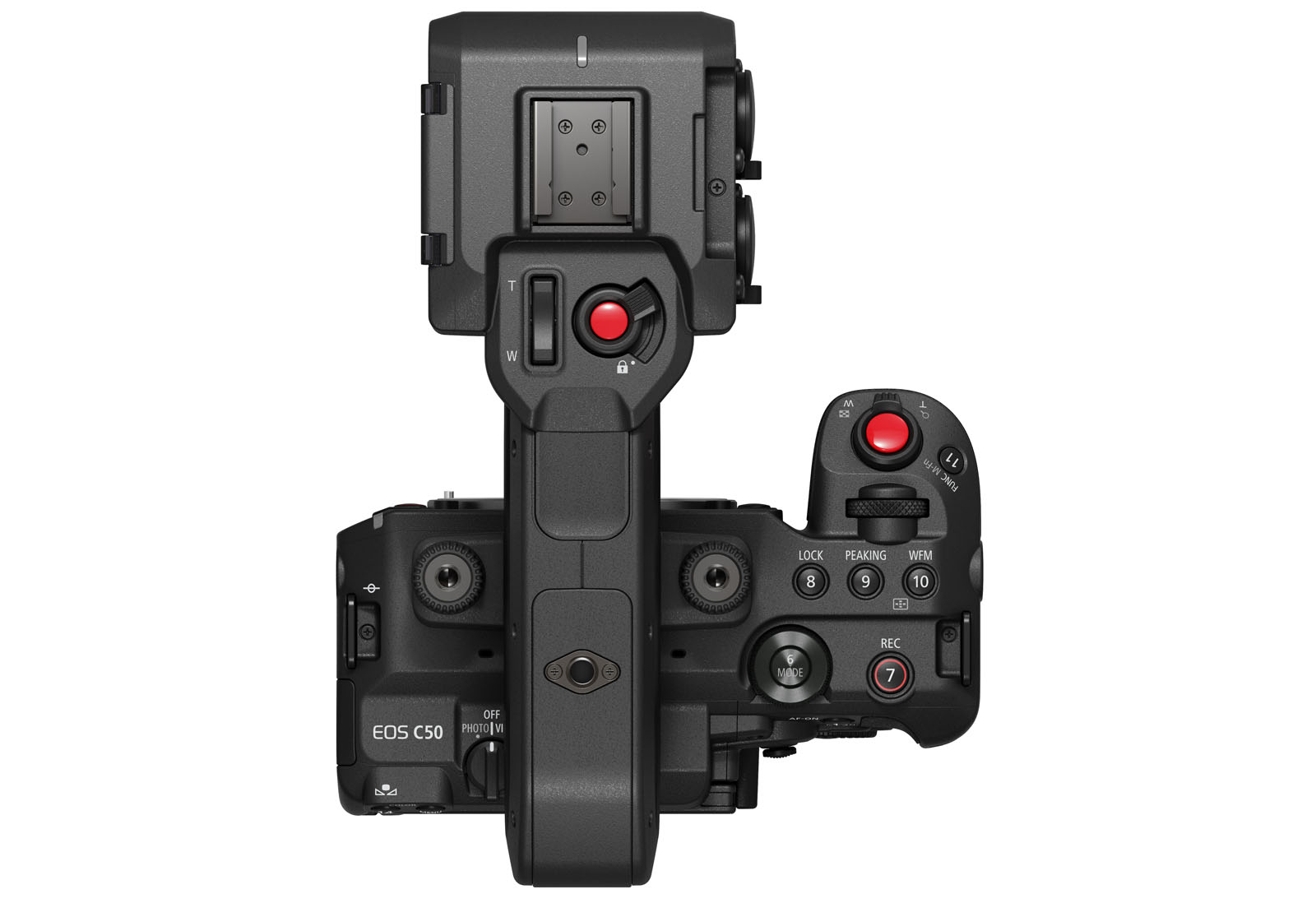
That said, the Sony FX3 has some advantages, too. It is slightly smaller and lighter than the Canon EOS C50, and it features five-axis in-body image stabilization and a mechanical shutter. The FX3 is also an E-mount camera, which while not a massive advantage when considering only first-party lenses, opens up the FX3 to a huge and accessible range of third-party and adapted lenses. The inclusion of IBIS in the FX3 could be more than enough of an advantage to keep FX3 owners from eyeing the C50 with envy.

There is also the cost consideration. The Canon EOS C50 is $3,900 and ships with an XLR handle unit. The Sony FX3 is $200 more up front, plus its XLR handle is another $600. The $800 difference is not nothing, especially given the C50’s relative advantages on paper.
The Canon EOS C50 has a lot going for it and definitely shakes up the full-frame hybrid camera landscape in many compelling ways. But the Sony FX3 is the established standard-bearer in the space for a reason. It will also be fascinating to see what features Sony’s next video-centric hybrid camera in this price range will include.
Image credits: Canon and Sony. Header created using assets licensed via Depositphotos.