Sony a7 V Dynamic Range Performance Is On-Par With 100MP Medium Format Cameras
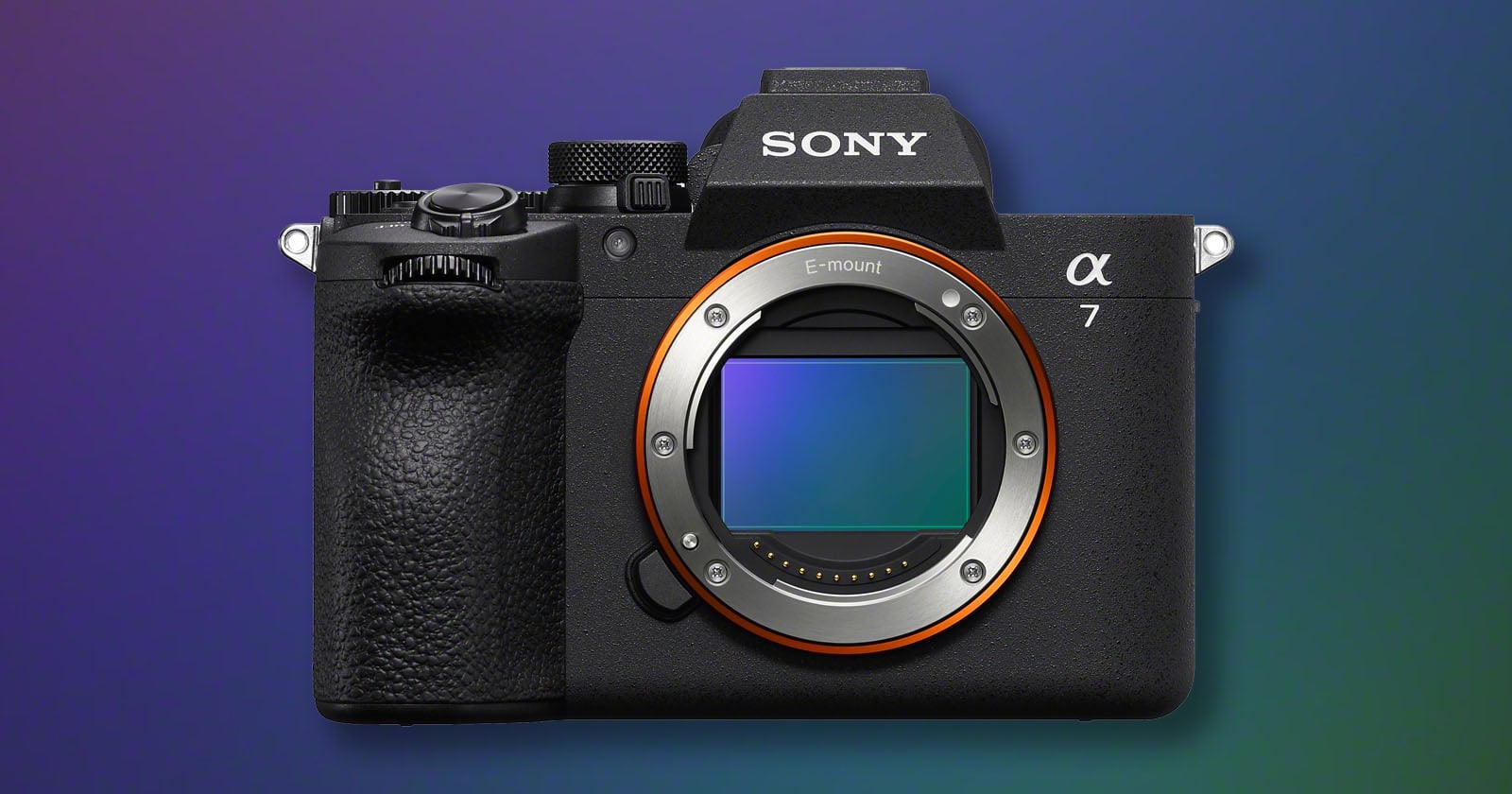
William “Bill” Claff of Photons to Photos has published his Sony a7 V photographic dynamic range (PDR) results. They are fascinating for multiple reasons, not the least of which is that the a7 V’s dynamic range performance is superb, rivaling, at least on paper, medium-format cameras with much larger image sensors.
Update 12/12: Bill Claff at Photons to Photos has revised his Sony a7 V dynamic range results, now determining that the camera is not utilizing baked-in noise reduction but instead achieves its excellent dynamic range thanks to Dual Gain Output. This story has been tweaked accordingly.
When Sony introduced the a7 V just over a week ago, it promised improved dynamic range performance compared to its predecessor, and early testing indicates that Sony has delivered on its promise. The camera’s brand-new 33-megapixel partially stacked image sensor is seriously impressive.
As PetaPixel‘s Chris Niccolls explained in his Sony a7 V Review, “Normally, there is some loss of dynamic range when using stacked sensor of any kind; however, the a7 V bucks this trend by bringing a noticeable improvement over the older a7 IV.”
Niccolls also notes that despite using a partially stacked sensor, which again, typically incurs some loss in dynamic range, the a7 V delivers some advantages over the Canon EOS R6 Mark III and its unstacked 33-megapixel sensor in terms of overall image quality. However, both cameras are fantastic across the board.
Despite how impressive the a7 V proved to be in practice, Claff’s dynamic range results are still surprisingly good. The a7 V maxes out at a PDR of 12.47, which puts it in company with cameras like the Fujifilm GFX100 II (12.55) and the Hasselblad X2D II 100C (12.46). Those 102-megapixel medium-format cameras have much larger image sensors than the full-frame a7 V and are specifically tuned for maximum image quality, even at the cost of other performance metrics. The Sony a7 V, on the other hand, is fast, capable of shooting full-resolution RAW files at up to 30 frames per second. To do so without any obvious image quality cost is remarkable.

Initially testing indicated that the a7 V may be using baked-in noise reduction, like Sony also applies to RAWs captured by its global-shutter-equipped a9 III. However, subsequent testing indicates that the a7 V’s excellent dynamic range results from DGO implementation rather than noise reduction.
To see the results for themselves, PetaPixel Members can download our RAW files for themselves, including our ISO ramp-up tests, from the Sample Gallery. The RAW files are not yet supported in Adobe Camera Raw or Lightroom, but Sony’s Imaging Edge Desktop software is free and supports the a7 V’s files.

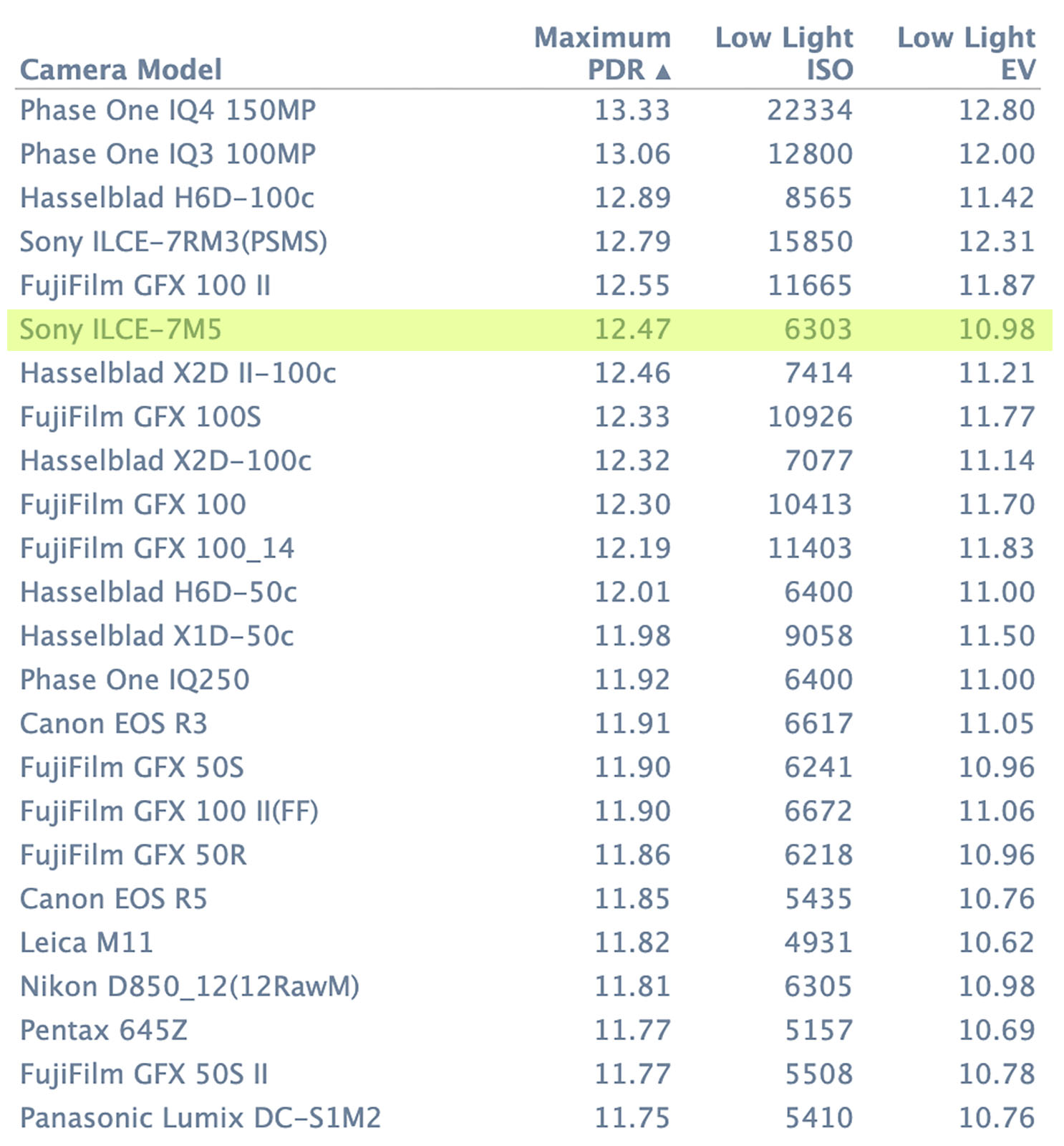
The a7 V is the best dynamic range performer yet for any camera with a partially stacked image sensor, and by quite a bit. The previous champion, the Panasonic Lumix S1 II, trails the a7 V at base ISO (100) by 0.7 PDR. The S1 II is a very interesting camera in how it achieves its excellent dynamic range performance.
As PetaPixel explained with the aid of excellent research by Adam Horshack, the S1 II utilizes Dual Gain Output. This combines two sensor readouts of a single exposure at two different ISO settings and merges the results in a final RAW image file. So, in the case of the S1 II, an image shot at ISO 100 combines one capture at ISO 100 and another at ISO 800. This approach works exceptionally well, but only with the mechanical shutter or the electronic first-curtain shutter — not with the fully electronic shutter.
When questioned about the S1 II’s sensor and dynamic range performance, Panasonic told PetaPixel that “DRBoost,” as the company calls it, is “active during stills shooting in some cases,” but stopped short of specifying the precise conditions in which it operates and how it works. The company added that this functionality is behind the improved image quality performance that Horshack and others have observed, though.

Sony, like all companies, keeps sensor technology advancements very close to the vest. We will do our best to wrestle some more information out of Sony about how the a7 V achieves its exceptional dynamic range performance, but for now, we know it has at least something to do with baked-in noise reduction, and it may go even further than that. We also know something else of significance for photographers: One way or another, the Sony a7 V’s new partially stacked 33-megapixel image sensor captures excellent images with unprecedented dynamic range.
Image credits: Sony. Charts courtesy of Photons to Photos (William J. Claff).