Canon in 2025: Fantastic R6 III Headlines a Strong Year for Canon
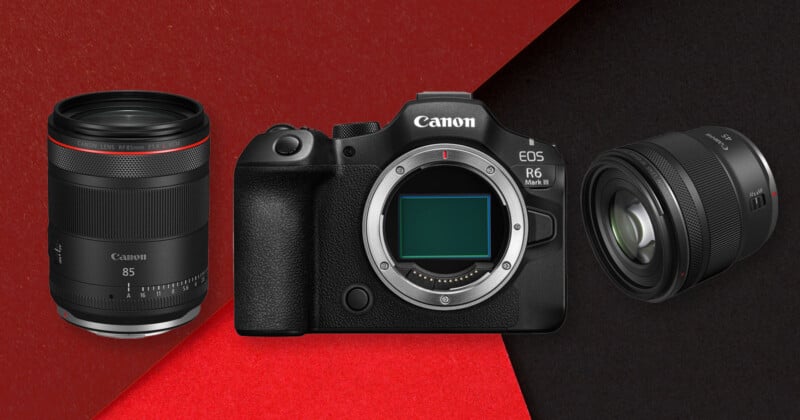
This was a busy year for Canon, highlighted by a very good video camera in the Canon EOS C50 and an even better hybrid camera in the EOS R6 Mark III, PetaPixel‘s Camera of the Year. But Canon’s 2025 included much more than just these two cameras, so let’s take a deeper dive into Canon’s year, how it transformed the EOS R landscape, and how it sets the stage for more excellence from Canon in 2026 and beyond.
Canon had a very good and busy 2024, fueled largely by the EOS R5 Mark II, which remains Canon’s best overall mirrorless camera, albeit for a pretty penny. Last year, Canon released four cameras: the Canon EOS C80, C400, R5 II, and flagship R1. This quartet of cameras, including two EOS Cinema models, was joined by a heap of seven lenses, although two of them are VR lenses with extremely limited appeal.
2025 was just as busy. Canon launched five cameras and six lenses, matching 2024’s very high output overall. However, as we’ll see, one of Canon’s “new” cameras and one of its lenses make “new” do some very heavy lifting. Nonetheless, what Canon (barely) lacked in quantity, it more than made up for in quality.
Four Great Cameras and One People Probably Shouldn’t Have Asked For
Canon kicked off the year with the PowerShot V1 in February, although the launch was strange. It wasn’t officially announced in the United States until late March. Nonetheless, this Sony ZV-1 Mark II competitor has little for photographers to get excited about but quite a bit for content creators to clamor over.
The PowerShot V1 combines a newly developed 22-megapixel Type 1.4 image sensor with a 16-50mm equivalent built-in zoom lens. It delivers excellent autofocus, good handling, a sharp built-in lens, and high-quality 4Kp30 full-width video recording. Is it the best and most exciting camera ever? No, but the PowerShot V1 lives up to the PowerShot’s beloved legacy and is a well-balanced camera for creators.
Another video-oriented camera with some photo chops arrived shortly thereafter in the form of the Canon EOS R50 V. This interchangeable lens 24-megapixel APS-C camera inherits some of Canon’s EOS Cinema features while retaining a budget-friendly $649.99 price tag.
As you would expect, the aggressive price tag results in some compromises, but the EOS R50 V remains a very competitive offering and, much like the PowerShot V1, gives Canon new ammunition in its fight against Sony to capitalize on the growing content creation market.
Canon’s third camera, technically announced alongside the one below, is yet another one aimed at video, although this time the much higher-end video market. The full-frame Canon EOS C50 is nearly an EOS R5 C successor, but not quite. The C50 lacks the R5 C’s EVF but has some compelling features of its own. The camera marked the debut of Canon’s brand-new 33-megapixel full-frame image sensor, which was quickly put into the EOS R6 III, and includes a wide array of very compelling video features.
The Canon EOS C50 has all the buttons and attachment points a professional videographer could want, but lacks some of the features that a mid-range creator might covet, like in-body image stabilization. Nonetheless, the C50’s 7K sensor records excellent video, including RAW, and, thankfully for the sake of Canon’s reputation among online critics, it captures open gate video, too.
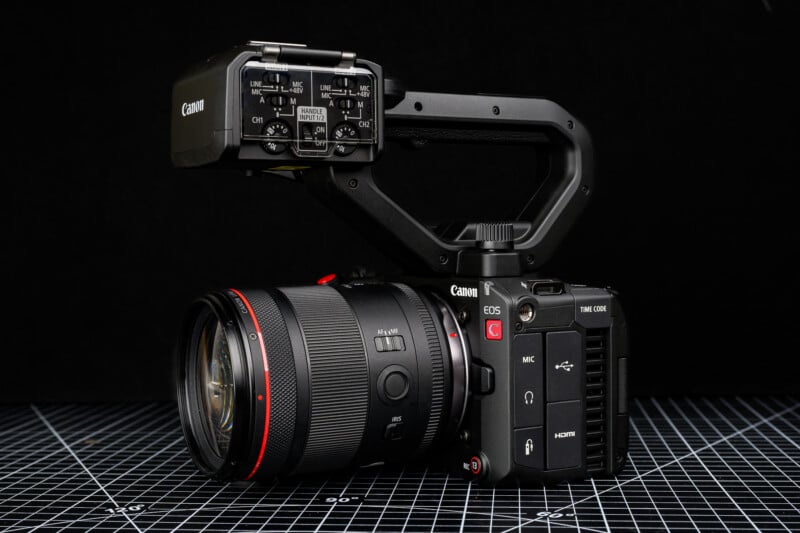
The Canon EOS C50 doesn’t have every feature we personally look for in a video camera, but if the C50’s limitations don’t matter to you, it’s a highly capable, professional-quality tool that captures gorgeous video.
While the Canon EOS C50 is great, the other camera Canon announced on September 9 is not. Heck, it’s not even really new. The compact point-and-shoot PowerShot 360 HS A is a worse version of the PowerShot 360 HS released way back in 2016, nearly a decade ago. The 360 HS was not a cutting-edge bit of camera tech back then, and the 360 HS A version is certainly not now.
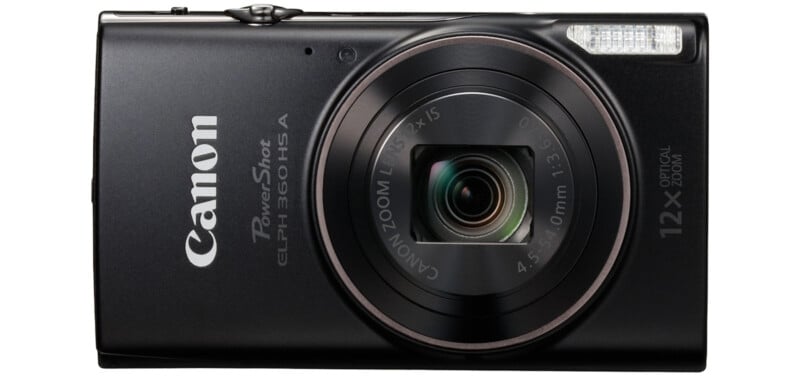
I understand that Canon is responding to a booming point-and-shoot market that for a long time seemed totally dead. I also get that it took quite a bit of cajoling for Canon to want to even spin back up production on a camera like this, let alone dedicate any new research and development investment to making something that is actually new, but still, this is a bad camera. Sure, it has more optical zoom than a modern smartphone, but its advantages end there. I’m including the “Buy Button” below because it would be petty not to, but for those who are looking to get a good camera for around $400, there are much better options.
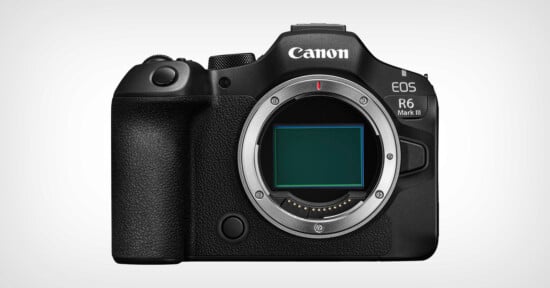
Thankfully, the PowerShot 360 HS A was merely a blip, an aberration caused by strange, TikTok-driven market forces. Canon was right back to business, making properly excellent cameras in November with the arrival of the highly anticipated Canon EOS R6 Mark III. I’m not going to beat around the bush here, the Canon R6 III is incredible. It’s PetaPixel‘s Camera of the Year for good reason, and it ran away with the People’s Choice Award for good measure.
The Canon R6 III puts the new 33-megapixel sensor that debuted in the C50 to excellent use. While it cannot quite match the new Sony a7 V in terms of its dynamic range, that is about the only area where the R6 III is a decided loser in a head-to-head showdown with its mid-range competition. The R6 III has excellent handling, reliably fast and accurate autofocus, very strong continuous shooting performance, and nearly all the video features from the excellent EOS Cinema C50.
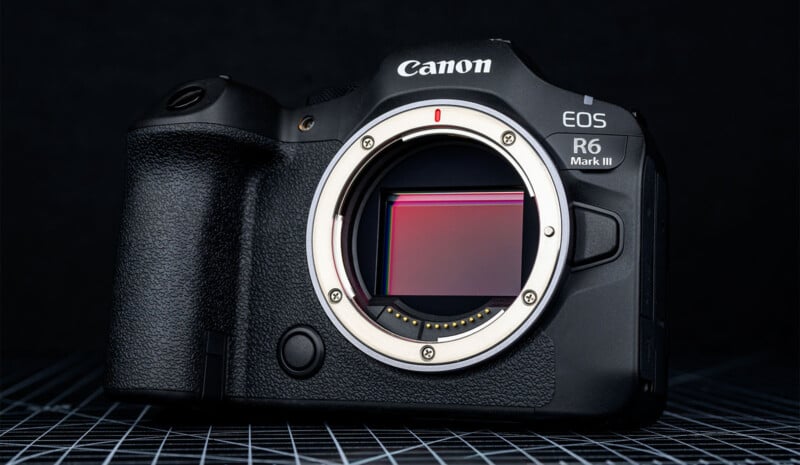
While I admittedly wish the R6 III borrowed even more from the C50 and its higher-res sibling, the R5 II, the R6 III is the best camera in a very crowded mid-range segment. As I concluded, the Canon EOS R6 III “is a superb mirrorless camera.” Honestly, that about sums it up. There was a lot of hype and high expectations for the R6 III, and Canon delivered.
Canon Launched Lenses for Nearly Everyone This Year
Canon kicked things off in 2025 with a new affordable zoom lens, the RF 16-28mm f/2.8 IS STM. This compact, lightweight, and affordable full-frame wide-angle zoom lens is a budget-friendly alternative to the excellent RF 15-35mm f/2.8L IS, an absolute banger of a lens. While the RF 16-28mm doesn’t make the same image quality promises as its L-series sibling, it does cost less than half as much, so some minor optical shortcomings are easy to forgive.
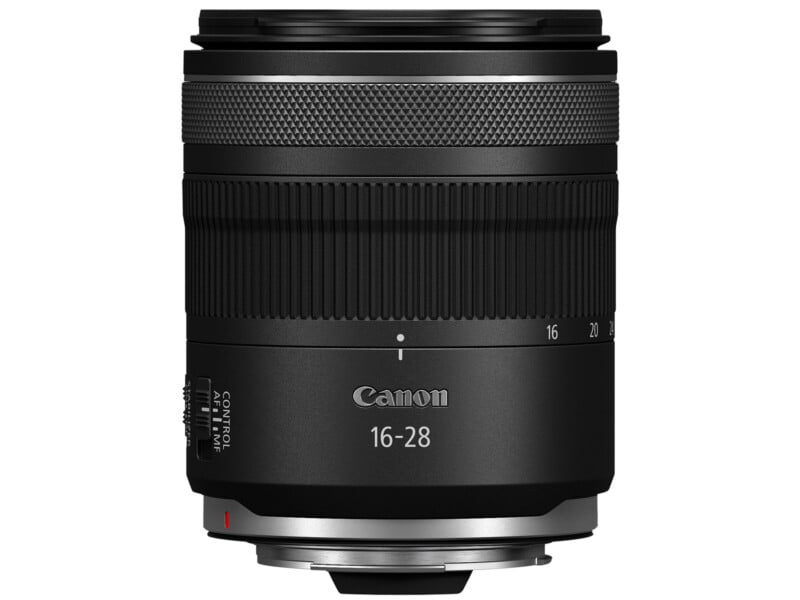
Lenses like this aren’t necessarily very exciting, but they are important. Most photographers aren’t spending many thousands of dollars on new lenses, so it is essential that they have good, affordable options that don’t cut too many corners. Providing photographers with f/2.8 zoom lenses that don’t break the bank and can take nice photos is always good news.
Just a couple of months later, in March, Canon announced two more lenses, one for APS-C cameras and the other for full-frame.
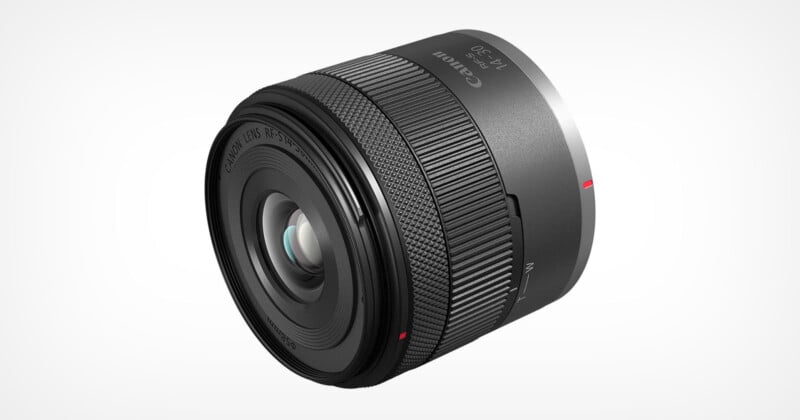
The APS-C lens, the RF-S 14-30mm f/4-6.3 IS STM PZ’s claim to fame is being the first RF lens with built-in power zoom capabilities. The RF 24-105mm f/2.8L Z and RF 70-200mm f/2.8L Z lenses have power zoom capabilities, too, but require an optional add-on accessory. The RF-S 14-30mm delivers a 22-48mm equivalent focal length range and is designed primarily for video, live streaming, and vlogging. That said, it’s also a nice option for landscape photographers with Canon APS-C cameras.
The other new lens released that month was the RF 20mm f/1.4L VCM, Canon’s widest f/1.4 lens ever. At the time, it was the fourth lens in Canon’s hybrid VCM f/1.4 lens family, although by the end of the year, there would be a fifth.
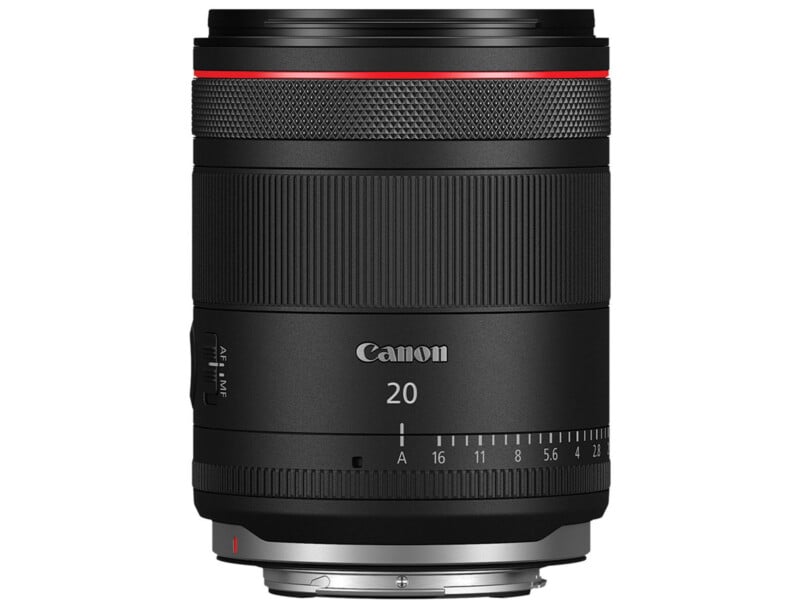
The Canon RF 20mm f/1.4L VCM shares the same form factor as the four other VCM lenses, maintaining a lightweight, compact design built for professional photo and video applications. Given its ultra-wide focal length and fast f/1.4 aperture, the RF 20mm f/1.4L VCM is also well-suited for night sky photography, a unique niche in Canon’s RF lens lineup. 20mm is a bit too wide to be broadly practical for everyone, but for those who appreciate wide-angle, the RF 20mm f/1.4L VCM is an excellent addition to Canon’s lineup.
In April, Canon announced the RF 75-300mm f/4-5.6 lens. If that focal length and aperture combination sounds familiar, you’re aging yourself. This “new” lens is essentially a remounted version of the Canon EF 75-300mm f/4-5.6 III lens for SLR cameras that launched way back in April 1999. The lens predates Canon’s first proper DSLR camera, and has the optical technology to prove it.
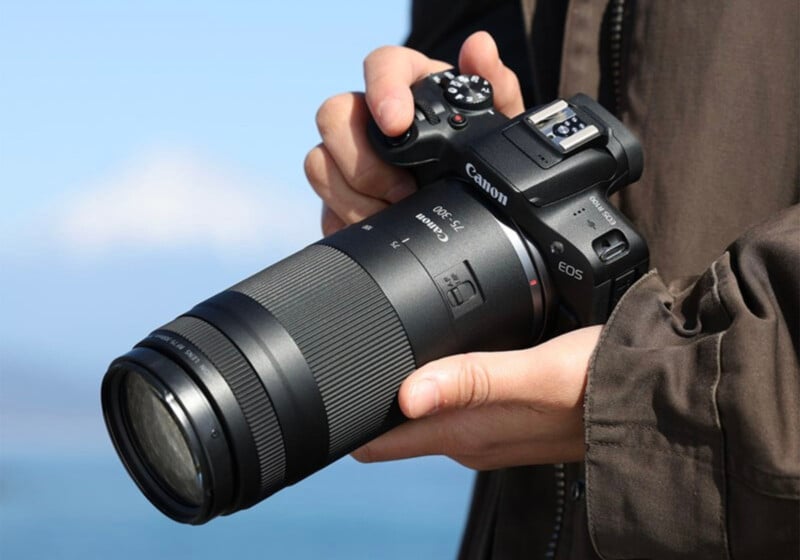
I don’t want to be too hard on a lens that may prove to be very useful for photographers on a tight budget. The more accessible that photography gear is, the better. However, as we will see, Canon can deliver new, exciting, and affordable lenses for RF photographers. The RF 75-300mm may be affordable, but it’s neither new nor exciting.
Canon’s fifth VCM prime lens, the RF 85mm f/1.4L VCM, arrived alongside the EOS C50 and PowerShot 360 HS A. I got to go hands-on with all five of the VCM lenses when I went to Tokyo with my colleague, Chris Niccolls, during which time he fully reviewed the RF 85mm f/1.4L VCM.
The RF 85mm f/1.4L VCM, the longest lens in the VCM lineup, is also perhaps its most impressive from an optical perspective. Unlike the other four VCM primes, the RF 85mm f/1.4L VCM does not require in-camera optical corrections. I don’t have any issue with digital lens corrections, personally, but it’s often better when a lens doesn’t need them.
Working with the VCM lenses for a singular project like the RF 85mm f/1.4L VCM video review helped demonstrate their utility. Being able to swap across all five focal lengths without worrying about using different filter sizes or having to work around differences in focus ring or control placement. The unified design is very nice, and frankly, more valuable than I would have expected.
Not to keep beating this drum, but Canon’s final lens of 2025, the RF 45mm f/1.2 STM, makes the RF 75-300mm all the more disappointing. This is what an affordable lens should be. The RF 45mm f/1.2 provides Canon photographers with an affordable full-frame alternative to something like the RF 50mm f/1.4L VCM and even the RF 50mm f/1.2L, which cost $1,449 and $2,599, respectively. The RF 45mm f/1.2 STM is just as fast and costs just $469.
Is the Canon RF 45mm f/1.2 STM as optically impressive as Canon’s L-series 50mm primes? No, of course not. But the RF 45mm f/1.2 STM is pretty darn good, has character, is tiny and lightweight, and doesn’t break the bank. I will be shocked if the RF 45mm f/1.2 lens doesn’t prove to be extremely popular with photographers, and it deserves to be.
Grading Canon in 2025
Last year, I gave Canon an A-, thanks in large part to the R5 II and a new series of VCM f/1.4 prime lenses. It was a great year for Canon, and I think 2025 was similarly impressive.
The Canon EOS R6 III is the obvious highlight, but the PowerShot V1, R50 V, and C50 are all quite exciting as well, albeit more for video users than photo ones. On the glass side, the RF 20mm f/1.4L VCM and RF 85mm f/1.4L VCM are excellent additions to Canon’s VCM family, and the RF 45mm f/1.2 STM is super exciting. I hope it’s a sign of things to come for how Canon approaches affordable lens design.
Unlike some of my colleagues, I won’t ding Canon for continuing to keep its RF mount closed. I’m grading the company on its new products, rather than its broader business moves. However, I agree with them that the RF mount having full-frame third-party lenses with autofocus would be a very welcome change.
Grade: A-
Featured image created using an asset licensed via Depositphotos.